
Seville Aquarium (Acuario de Sevilla) is one of the most interesting aquariums in Andalusia, where marine life is presented in a wide variety of forms — from inhabitants of the Guadalquivir to sharks, sea turtles and exotic tropical species that are rarely seen at such close quarters.
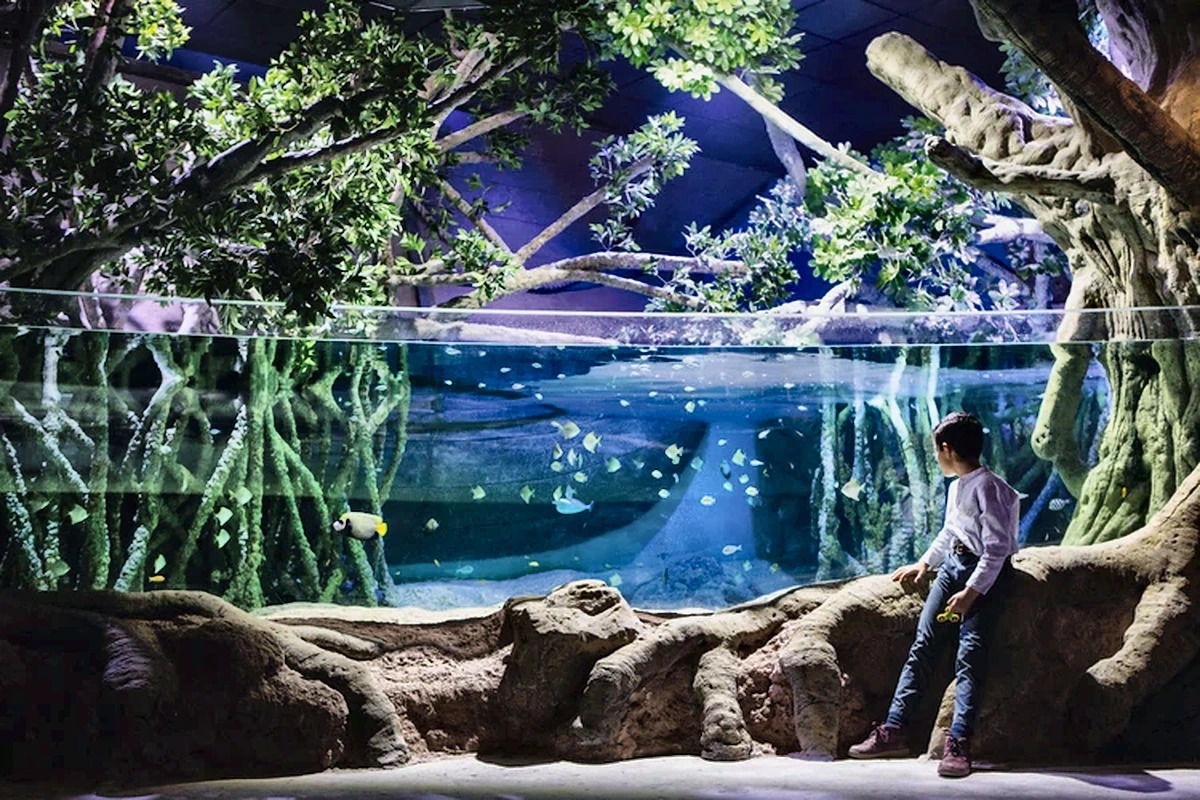
It was from Seville that Ferdinand Magellan's expedition set sail in 1519, beginning the first circumnavigation of the world in history. Today, that story has found a completely new continuation here: instead of ships and maps, visitors discover the living world of rivers, oceans and tropical seas.
The idea and history of Seville Aquarium
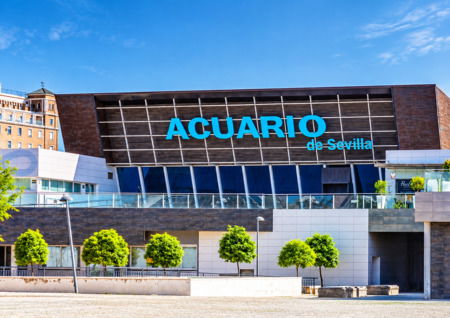
The history of the first circumnavigation of the world became the foundation of the concept behind Seville Aquarium. It was conceived not simply as a collection of aquariums, but as an introduction to the different seas and ecosystems encountered along the route of Ferdinand Magellan's famous expedition.
Seville Aquarium itself opened in 2014 at Muelle de las Delicias on the Guadalquivir. Its location was also chosen for a reason: for centuries, the river was connected with maritime trade and voyages, and today it provides a natural starting point for this unusual journey through the underwater world.
What awaits you inside Seville Aquarium
A visit to Seville Aquarium is designed as a real journey in the footsteps of Magellan's expedition. The route begins with the Guadalquivir, then gradually leads out into the Atlantic, takes you to the enormous Oceanarium and then transports you to tropical and Pacific ecosystems. Along the way, not only do the aquarium inhabitants change, but the underwater worlds themselves seem to become increasingly distant from Seville.
The Guadalquivir — the beginning of the journey
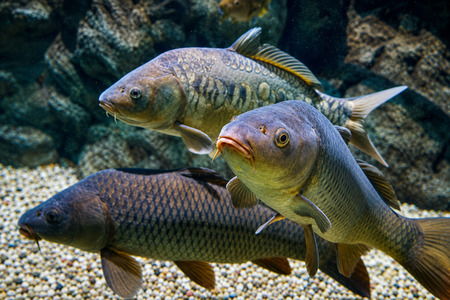
The journey begins where Seville's ships set sail for centuries — on the Guadalquivir. This part of Seville Aquarium features freshwater inhabitants, among which the sturgeon is particularly interesting — a fish that was once part of this river's ecosystem. Here, the maritime journey begins within Seville itself, but the open ocean already lies ahead.
The Atlantic — out into the open ocean
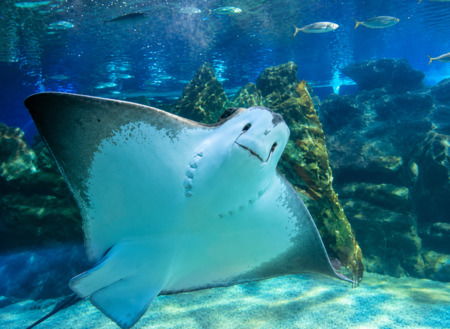
The next stop is the Atlantic. After the calm river waters, the surroundings gradually change: open-ocean inhabitants appear, with the mosaic ray standing out in particular. Here, you can already sense a completely different scale — instead of the familiar river environment, visitors find themselves in a genuine marine world.
This is a natural continuation of the journey: Seville is left behind with the Guadalquivir, while ahead lie the open ocean and increasingly distant seas. But the true impression of the vast ocean awaits further on — in the enormous Oceanarium, which is the next stop on the route.
Oceanarium — an underwater world all around you
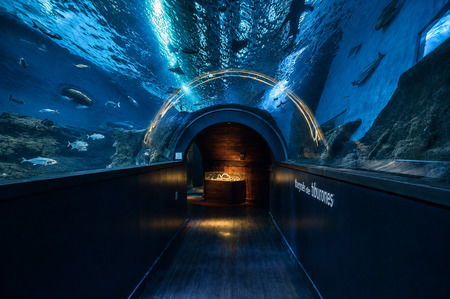
After the Atlantic, the main highlight of Seville Aquarium awaits you — the enormous Oceanarium. Its tank holds around two million litres of water and reaches a depth of nine metres. It is home to sharks, sea turtles and other large marine animals, which you can observe from different levels.
But the most unusual feature is the special underwater tunnel that runs directly through the tank. As you walk along it, it feels as though water surrounds you on all sides, while sharks and turtles swim right beside you. This is where the scale of the aquarium is most strongly felt — no longer as an exhibition behind glass, but as a genuine immersion in the underwater world.
Selva Tropical — an unexpected change of world
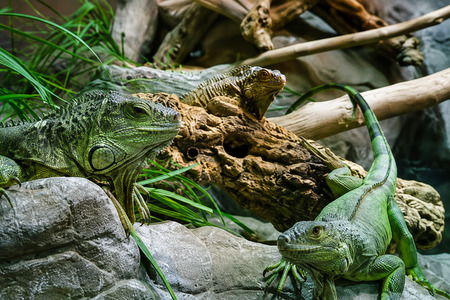
After the enormous Oceanarium, the route suddenly changes. Instead of the open ocean, a humid tropical world appears, with dense vegetation and completely different inhabitants. Here, the green iguana catches your attention, seeming to transport you from the underwater world into the real tropics.
In this way, the journey continues to change its scenery: warm, humid forests follow the vast ocean, while another major change of environment awaits ahead — the Indo-Pacific region with its vibrant underwater world.
The Indo-Pacific Region — a vibrant underwater world
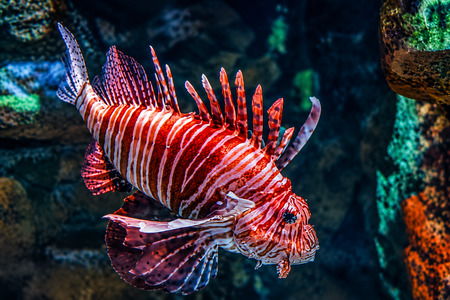
The journey then takes you even further — into the waters of the Indo-Pacific region. After the river waters, the Atlantic and the enormous Oceanarium, the diversity of the tropical underwater world is particularly striking here: colourful inhabitants and unusual forms of life create a completely different atmosphere.
Among them, the striking lionfish stands out, with its long fins and distinctive striped colouring. At this point, the main part of the journey through marine ecosystems comes to an end, but Seville Aquarium still has other interesting spaces to explore.
Other areas of Seville Aquarium
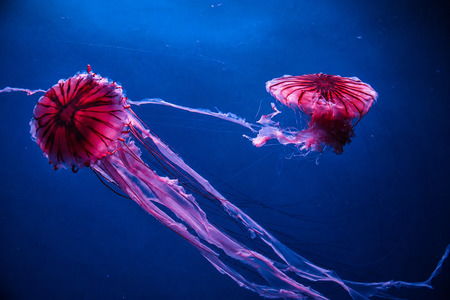
In addition to the main route, there are also other themed areas here. These include the African savannah and a separate area dedicated to jellyfish. They complement the exhibition and allow you to discover several more completely different natural worlds.
The jellyfish area is particularly unusual: their graceful movements and almost weightless silhouettes create a completely different impression after the colourful tropical fish, sharks and large marine animals.
Tickets for Seville Aquarium
For a visit to Seville Aquarium, you can choose a standard admission ticket and explore the entire exhibition independently at your own pace. This option is suitable for a relaxed walk along the main route, including the Guadalquivir, the Atlantic, the Oceanarium, the tropical forest and the Indo-Pacific region.
Combined tickets are also available, allowing you to combine a visit to Seville Aquarium with other attractions and activities in Seville. This option can be particularly convenient if you would like to discover several interesting places in the city in a single day.
What else to see in Seville
The aquarium can easily be included in your Seville itinerary and combined with other attractions in the city. After exploring the underwater worlds, you can head to the historic centre, discover Andalusian culture or choose entertainment for the whole family.
- What to See in Seville — a detailed guide to the city's main attractions, historic districts, squares and other interesting places worth seeing during your trip.
- Royal Alcázar in Seville — a famous palace complex with richly decorated halls, courtyards and gardens, where the city's centuries-old history can be felt particularly strongly.
- Seville Cathedral — one of the largest Gothic cathedrals in the world, where you can see the tomb of Christopher Columbus, the Royal Chapel and climb the famous Giralda.
- The Archive of the Indies in Seville — a historic building next to the Cathedral and the Alcázar, housing documents connected with expeditions, discoveries and the exploration of Spanish territories overseas.
- Where to see flamenco in Seville — a practical guide to tablaos in the historic centre, performances in Triana, intimate venues, peñas and the Museo del Baile Flamenco.
- Street markets in Seville — an opportunity to see a more everyday side of the city, walk among local market stalls and discover the produce and atmosphere of different neighbourhoods of Seville.
- Theme parks and family activities in Seville — ideas for those travelling with children or looking to diversify their sightseeing programme with rides, entertainment and other family-friendly activities.
- Isla Mágica in Seville — a theme park with rides, shows and themed areas that can become a separate highlight of a family trip.

 English
  Español
  Русский