
The Archive of the Indies in Seville is one of the city's most unusual historic sites. It houses documents connected with the voyages of Spanish sailors, the discovery and exploration of the Americas, while the building itself is located in the very centre of Seville, literally between the Cathedral and the Royal Alcázar.
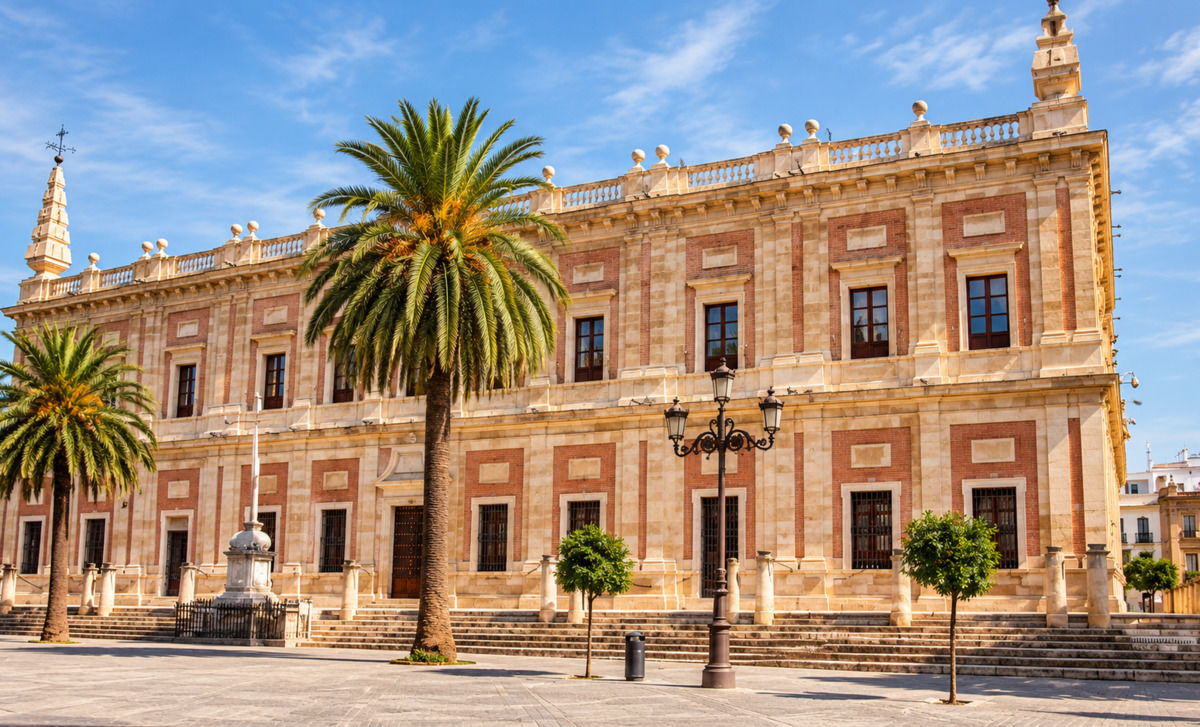
The Archive of the Indies, together with the Cathedral and the Royal Alcázar, forms part of a UNESCO World Heritage Site. Its collections contain millions of pages of documents, maps and plans connected with the history of Spanish expeditions and overseas territories. Among them are materials relating to Christopher Columbus, Ferdinand Magellan, Hernán Cortés and Francisco Pizarro. For many people, this is an opportunity not simply to see a beautiful historic building, but to come into contact with the real history of the Age of Discovery.
History of the Archive of the Indies
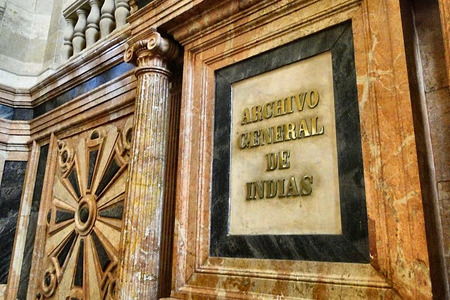
The building that now houses the Archive of the Indies predates the archive itself by several centuries. In 1585, by order of King Philip II, construction began in Seville on the Casa Lonja de Mercaderes — a trading exchange for merchants involved in business with Spanish territories overseas. For a city that was at the time the centre of trade with the New World, such a building was particularly important.
However, over time Seville's commercial life changed. In 1717, the main trading institutions involved in commerce with the Americas moved to Cádiz, and the Casa Lonja gradually lost its original importance. Several decades later, the building took on a new role.
In 1785, by order of King Charles III, the Archivo General de Indias was established here. Its main purpose was to bring together in one place documents relating to Spanish territories in the Americas and the Philippines, which had previously been kept in different cities across Spain. In this way, the former trading exchange became one of the largest historical archives connected with the era of Spanish discoveries and the exploration of the New World.
What awaits you inside the Archive of the Indies
Visiting the Archive of the Indies is quite different from exploring a palace or cathedral. There are no long enfilades or dozens of rooms, but the building itself helps you appreciate the scale of the history that was connected with Seville and the New World for several centuries. The route passes through the historic spaces of the former trading exchange, the courtyard and exhibition galleries, where you can see documents and materials telling the story of the era of Spanish expeditions.
Casa Lonja and the courtyard
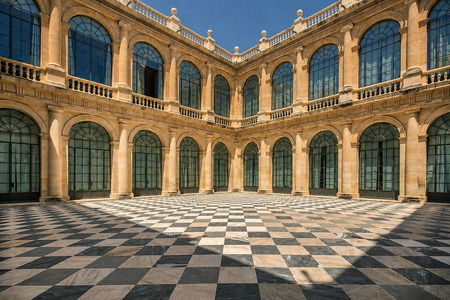
From the very first steps, your attention is drawn to Casa Lonja itself — a sober stone building with symmetrical façades, spacious galleries and a courtyard. After the richly decorated halls of the Alcázar and the vast space of the Cathedral, the atmosphere here feels completely different: calm, austere and almost monumental.
At the centre of the building is a square courtyard surrounded by arcades. Its architecture is reminiscent of the famous courtyard of the El Escorial monastery near Madrid, which particularly highlights the connection between Casa Lonja and Spanish Renaissance architecture.
Galleries and exhibition spaces
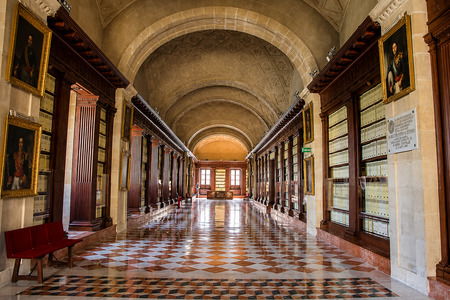
The route then continues through the building's historic galleries. Today, part of the space is used for exhibitions, where you can sometimes see original documents, maps and other materials that help you imagine how Spain governed its vast overseas territories. Here, you are no longer simply looking at historic architecture — gradually, you begin to understand just how vast the system that once operated from this trading exchange really was.
Documents of great explorers
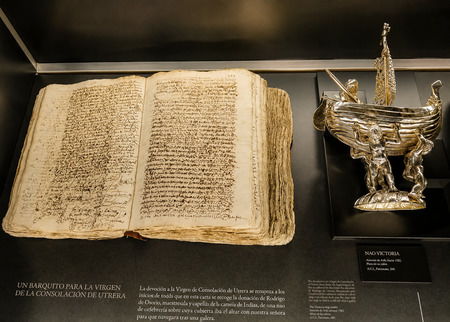
The most fascinating thing about the Archive of the Indies lies not only in its architecture, but also in what is preserved behind these walls. Documents connected with Christopher Columbus, Ferdinand Magellan and Juan Sebastián Elcano, Hernán Cortés, Francisco Pizarro and other figures from the history of Spanish expeditions have survived here. The archive's holdings include letters, reports, maps and documents relating to voyages, the discovery of new lands and the administration of vast territories overseas.
It is particularly fascinating to imagine that these are not retellings of historical events, but real documents belonging to people who set off into the unknown several centuries ago and changed Europeans' understanding of the world. That is why the Archive of the Indies feels quite different from an ordinary museum: here, history has literally been preserved on paper.
Visiting the Archive of the Indies
You can visit the Archive of the Indies free of charge, so for an independent visit it is enough to come during opening hours and explore the building and the exhibition spaces open to visitors. If you would like to learn more about the history of the archive and its documents, you can choose a guided tour with a professional guide.
Combined options are also available, allowing you to combine a visit to the Archive of the Indies with the Cathedral, the Royal Alcázar or other historic sights in Seville. This format is particularly convenient if you are planning to explore several historic monuments in the city centre.
What else to see in Seville
The Archive of the Indies is located in the very heart of the historic centre, so it is easy to combine a visit with other attractions in Seville. The Cathedral and the Royal Alcázar are nearby, and if you would like to diversify your itinerary, you can add a walk around the city's markets or an evening flamenco performance.
- What to see in Seville — a detailed guide to the city's main attractions, historic districts, squares and other interesting places in the capital of Andalusia.
- Royal Alcázar in Seville — a magnificent palace complex with luxurious halls, gardens and courtyards, located literally next to the Archive of the Indies.
- Seville Cathedral — one of the largest Gothic cathedrals in the world, with the tomb of Christopher Columbus, the Royal Chapel and the famous Giralda. Together with the Archive of the Indies and the Alcázar, it forms part of a UNESCO World Heritage Site.
- Where to see flamenco in Seville — a practical guide to tablaos in the historic centre, performances in Triana, intimate venues, peñas and the Museo del Baile Flamenco.
- Festivals and holidays in Seville — Semana Santa, Feria de Abril and other annual events that vividly showcase the city’s traditions and atmosphere.
- Museums in Seville — art collections, archaeology, flamenco, Andalusian traditions and the city’s unusual museum spaces.
- Street markets in Seville — a good way to see the everyday side of the city, discover local produce and experience the atmosphere of different neighbourhoods in Seville.
- Theme parks and family activities in Seville — ideas for a family trip and options for diversifying a classic sightseeing programme.

 English
  Español
  Русский