
Seville Cathedral is one of the most impressive places of worship in Spain and the largest Gothic cathedral in the world. Today, it is considered one of the main symbols of Seville and Andalusia as a whole, while its famous Giralda has long been an integral part of the city's skyline.
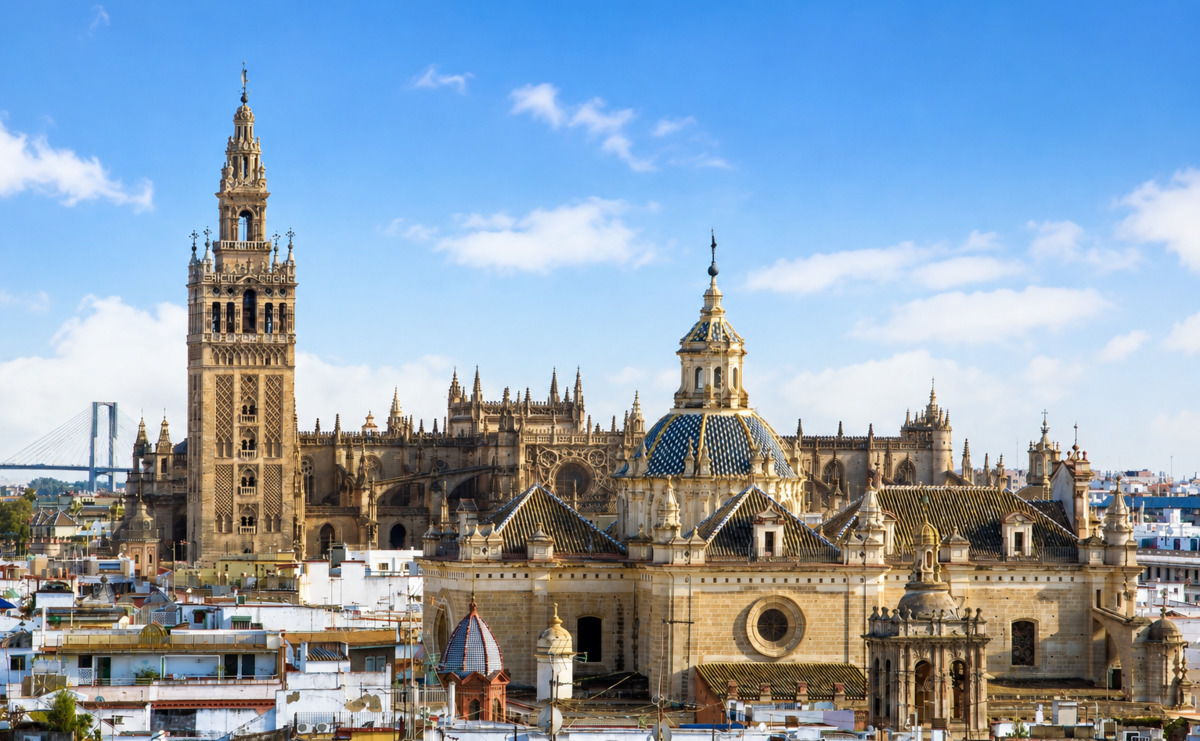
Seville Cathedral forms part of a UNESCO World Heritage Site and attracts travellers from all over the world every year. It is a place worth seeing not only because of its enormous scale, but also for the atmosphere of one of Spain's most famous historic monuments.
History of Seville Cathedral
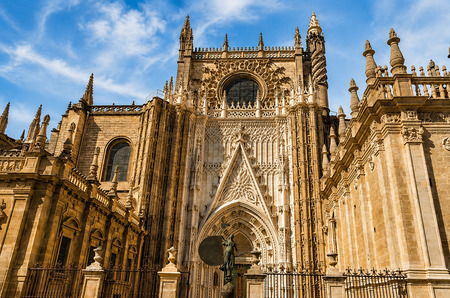
The history of Seville Cathedral begins long before the present cathedral came into existence. In the 12th century, the Almohad rulers built Seville's main mosque here. Work began in 1172, and in 1198 its magnificent minaret was completed, which is known today as the Giralda.
After Seville was conquered by Christian forces in 1248, the mosque was not immediately demolished. It was converted into a Christian church, while the minaret was preserved and turned into a bell tower. In this way, the old building gradually became part of the city's new history.
At the beginning of the 15th century, the decision was made to replace the old mosque with a huge Gothic cathedral. In 1401, the Chapter of Seville began this ambitious project, and construction continued for more than a century. The old mosque was gradually replaced by the new church, but some elements of its past have survived to this day.
That is why a walk through Seville Cathedral is not simply an introduction to one of Europe's greatest Gothic churches. Within its walls, you can still see traces of the city as it was many centuries ago.
What awaits you inside Seville Cathedral
As soon as you step inside Seville Cathedral, its true scale becomes immediately apparent. The vast space, high vaulted ceilings, massive columns and soft light filtering through numerous stained-glass windows create the impression that the interior continues in every direction. As you walk through the cathedral, you will encounter dozens of chapels and works of art from different periods — from medieval Gothic art to later works, including paintings, sculptures, decorative art and ancient choir books.
The main altar — the heart of the cathedral
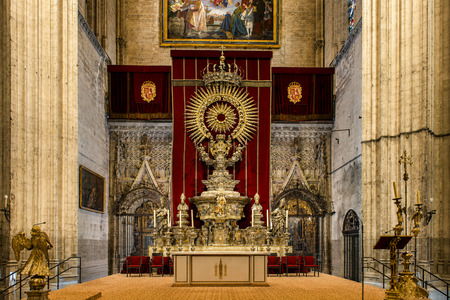
In the central part of the cathedral stands the main altar — one of the most impressive works of art in the entire church. The enormous structure, around 30 metres high, is covered with carvings and sculptures, and its creation began as early as 1482 and continued for almost a century. Before visitors, a truly gigantic altarpiece gradually unfolds, occupying almost the entire height of the space and immediately drawing the eye.
The tomb of Christopher Columbus
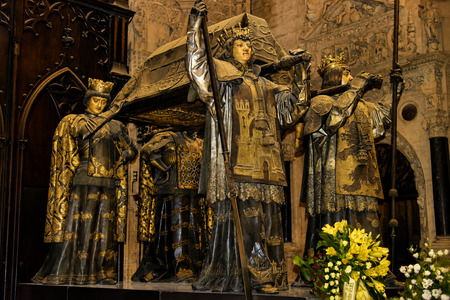
One of the most famous sights inside the cathedral is the tomb of Christopher Columbus. It has been here since 1899 and looks unusual: instead of a traditional sarcophagus, visitors see an entire sculptural composition resembling a solemn funeral procession. The tomb is carried by four heralds, making it one of the cathedral's most memorable monuments.
The Royal Chapel
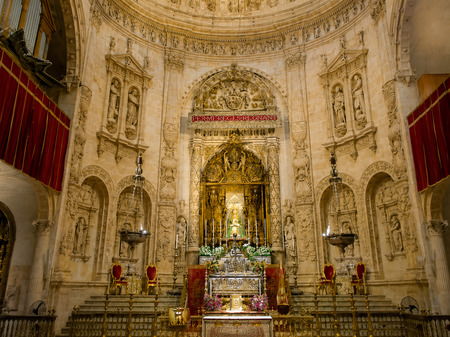
The next stop is the Royal Chapel, located in the eastern part of the cathedral. Here, the connection between the church and the history of the Spanish monarchy is particularly evident. The crypt contains the royal pantheon, where members of the Spanish royal family are buried, including Pedro I of Castile and his wife María de Padilla. The chapel's main altar is adorned with the famous statue of the Virgin of the Kings — a 13th-century image considered one of the cathedral's principal religious symbols.
The Chapter House — an unexpected stop
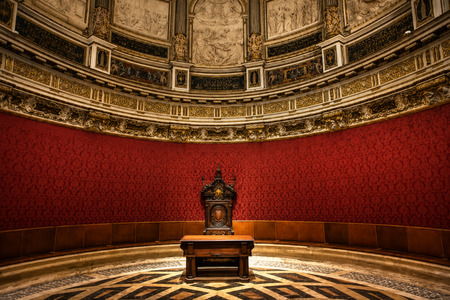
After the vast space of the cathedral, the route leads to the Chapter House — one of the finest examples of Spanish Renaissance architecture. Its oval shape was not chosen by chance: it allowed those attending meetings to see and hear one another clearly. The dome is particularly impressive, decorated with works by Murillo, commissioned by the cathedral chapter in the 17th century.
Patio de los Naranjos — a corner of old Seville
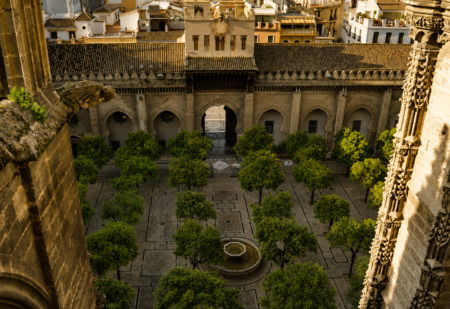
After the vast space of the cathedral, the route unexpectedly leads into a completely different atmosphere. Patio de los Naranjos is a quiet courtyard with rows of orange trees, water and ancient arcades, which was once part of Seville's main mosque. Elements of the original structure have survived here, while the central fountain stands on the site of the ancient ablution fountain.
It is particularly interesting to walk between the orange trees and notice the small channels that connect them in rows and form a geometric pattern. Water still flows through them today — a traditional irrigation system that has survived from the days of the old mosque. In spring, when the orange trees are in bloom, the courtyard fills with the scent of orange blossom and becomes one of the most pleasant places along the entire route.
The Giralda — the final part of the route
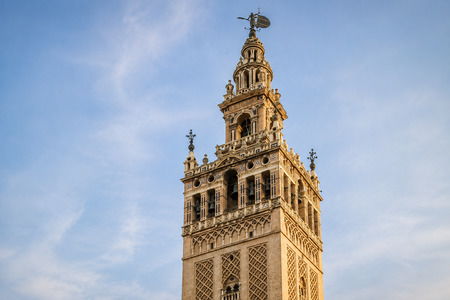
Before leaving, it is worth climbing even higher to the famous Giralda, which today is considered the main symbol of Seville. It was once the minaret of the city's main mosque, built in the 12th century. After the mosque was converted into a Christian cathedral, the upper part of the tower was rebuilt, and its summit was crowned with the bronze Giraldillo — a figure symbolising the triumph of faith.
Inside the tower, instead of a conventional staircase, there are wide ramps that once allowed people to ride to the top on horseback. Today, this route leads to a viewing platform offering panoramic views of Seville's historic centre and allowing you to see the city from a completely different perspective.
Tickets for Seville Cathedral
The choice of visit option depends on how you would like to explore Seville Cathedral. A standard ticket allows you to explore the cathedral, Patio de los Naranjos and climb the Giralda independently. You can also choose an option with an audio guide or a guided tour with a professional guide who explains the history and main works of the cathedral, or purchase a combined ticket that allows you to combine a visit to the Cathedral and the Giralda with other attractions in Seville.
As the number of visitors is limited, especially at popular times and during the peak season, it is best to purchase your tickets in advance.
What else to see in Seville
Seville Cathedral is located right in the heart of the city's historic centre, so it is easy to combine it with other attractions. The Royal Alcázar and the Archive of the Indies are nearby, and after visiting the main monuments, you can continue your walk through the streets of Seville, stop at a local market or end the day with a flamenco performance.
- What to see in Seville — a detailed guide to the city's main attractions, historic districts, squares and other places worth including in your itinerary.
- Royal Alcázar in Seville — a famous palace complex with luxurious halls, courtyards and gardens, located literally next to the Cathedral. Together with the Cathedral and the Archive of the Indies, it forms part of a UNESCO World Heritage Site.
- The Archive of the Indies in Seville — a historic building that was once a trading exchange and now houses documents connected with expeditions, discoveries and the exploration of Spanish territories overseas. It is located between the Cathedral and the Alcázar.
- Where to see flamenco in Seville — a practical guide to tablaos in the historic centre, performances in Triana, intimate venues, peñas and the Museo del Baile Flamenco. It is a good option for continuing to discover Andalusian culture in the evening.
- Festivals and holidays in Seville — Semana Santa, Feria de Abril and other annual events that vividly showcase the city’s traditions and atmosphere.
- Museums in Seville — art collections, archaeology, flamenco, Andalusian traditions and the city’s unusual museum spaces.
- Street markets in Seville — an opportunity to see the everyday side of the city, discover local produce and experience the atmosphere of different neighbourhoods in Seville.
- Theme parks and family activities in Seville — ideas for those travelling with children or looking to diversify their sightseeing programme with rides and other entertainment.

 English
  Español
  Русский