
Seville is one of those cities where discovering Andalusia begins not only with palaces, squares and flamenco, but also with food. Tapas bars, old taverns, fragrant olive oil, fish, jamón and dishes with a distinctive southern character make food an important part of city life.
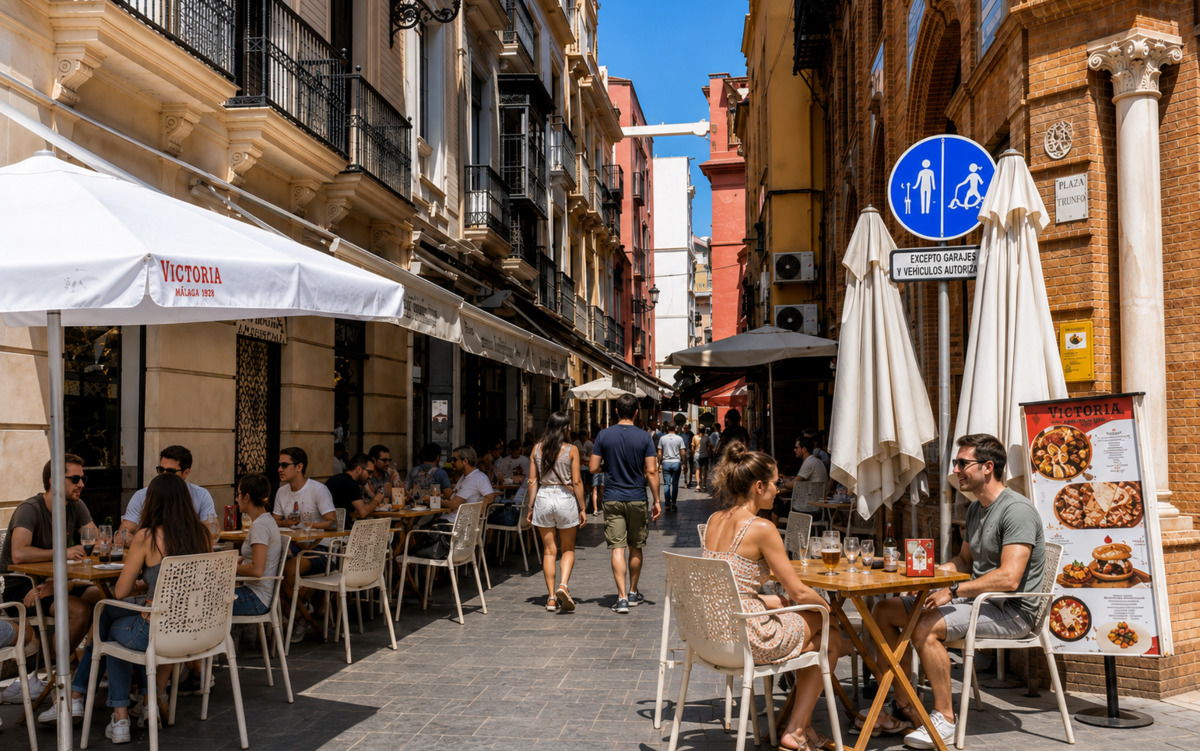
In Seville, it is interesting not only to try local dishes, but also to observe how the locals eat: dropping into small tapas bars, lingering on a terrace with a glass of wine or beer, and moving from one establishment to another in the evening. Each district also has its own character, so discovering the city's food scene can easily become part of a walk around Seville.
- What to try in Seville — traditional dishes, tapas, local sweets and drinks worth trying during your trip.
- Where to eat in Seville — the city's food districts and places to look for traditional cuisine and atmospheric bars.
What to Try in Seville
Seville cuisine is not just about a few classic recipes, but also an entire culture of everyday eating. Alongside traditional Andalusian dishes, the menus of local bars feature local specialities that are particularly characteristic of Seville. So the best way to discover the city's food scene is to start with a variety of small portions, gradually trying what is on offer at each particular establishment.
Traditional dishes of Seville
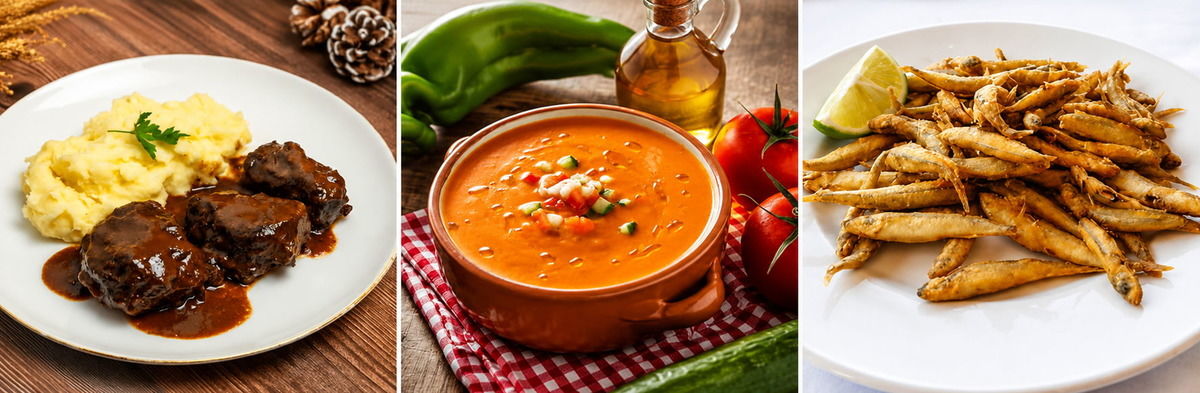
Espinacas con garbanzos — spinach with chickpeas, garlic and spices. Despite the simple ingredients, the combination is rich in flavour and gives a good impression of the character of the local cuisine.
Carrillada — slow-cooked pork cheek — is another classic option that you can find in Seville's bars and restaurants. The meat is tender and rich in flavour, so this is more of a small, substantial dish than a light appetiser. Other traditional options worth looking out for include cola de toro — stewed oxtail, huevos a la flamenca — eggs baked with vegetables and other additions, menudo sevillano — a thick tripe stew with chickpeas and spices, and pavías de bacalao — pieces of cod in a light, crispy batter.
Among cold dishes, on hot days it is particularly pleasant to try gazpacho — a light cold soup made with tomatoes, cucumber, pepper, olive oil and other vegetables, and salmorejo — a thicker cold tomato soup made with bread, olive oil and garlic.
A special place is occupied by pescaíto frito — small fish fried until crisp. Seville's bars also commonly serve adobo — marinated and fried fish, gambas, squid and other seafood. Although Seville is not on the coast, its proximity to the Atlantic makes fish dishes a notable part of the local food scene.
Tapas — the best way to try several flavours at once
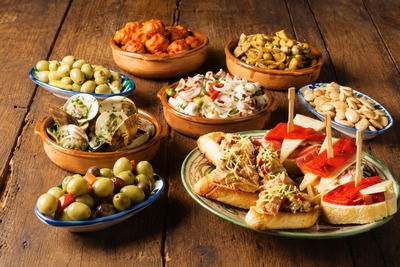
But perhaps the most natural way to try all of this is through tapas. In Seville, a small portion can be a dish in its own right, so it is easy to try several different flavours in a single evening. Some of the most common options include papas aliñás — boiled potatoes with onion, herbs and dressing, ensaladilla — a cold salad of potatoes, vegetables and mayonnaise, croquetas — small crispy croquettes with a creamy filling, pringá — a mixture of stewed meat and cured meats, often served in bread, and montaditos — small sandwiches with a variety of fillings. One characteristic option is montadito de pringá, where a filling of meat and cured meats is served in a small bread roll or piece of bread.
Sweets and desserts
You should not end your culinary discovery with the main dishes alone. Among Seville's traditional sweets, yemas de San Leandro are particularly well known — small, delicate sweets made from egg yolks and sugar, traditionally prepared by the nuns of the San Leandro convent. Depending on the season, you can also try torrijas — slices of bread soaked in milk or wine, fried and sprinkled with sugar and cinnamon, and pestiños — small pieces of dough that are fried and covered with honey or sugar, particularly characteristic of Holy Week.
What to drink in Seville

In Seville, tapas are not usually accompanied by just water or coffee. The most obvious choice is cerveza, meaning beer, which plays an important role in the local tapeo culture. Among Spanish wines, it is worth trying fino — a dry fortified wine from Jerez, and manzanilla — a light, dry wine from Sanlúcar de Barrameda. In summer, you may also come across rebujito — a refreshing drink made with wine and a fizzy drink, particularly popular during local festivals and one of Spain's characteristic traditional drinks.
Where to eat in Seville
In Seville, you do not need to look for one particular restaurant to get a good introduction to the local cuisine. Choose where to have dinner not only based on the menu, but also on which part of Seville you would like to experience.
Historic centre
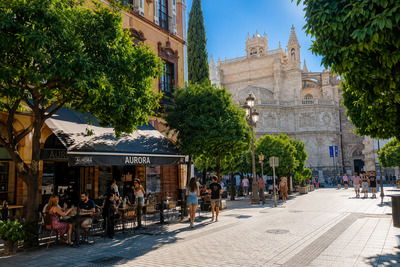
The historic centre is one of the most convenient options for your first introduction to Seville's food scene. Here, it is easy to combine a walk around the main sights with a stop at a tapas bar or traditional tavern: after visiting the Cathedral, the Alcázar or exploring the old quarters, you will not have to go far to find somewhere for lunch or dinner.
One of the best-known food streets in this part of the city is Mateos Gago, which runs alongside the Cathedral and the Giralda. It is lined with numerous bars and taverns where you can try tapas, order a beer or a glass of wine, and stop for a while during your walk through the historic centre.
Santa Cruz also deserves special attention — one of the most atmospheric districts of the historic centre. Narrow streets, white houses, orange trees and small squares surround traditional bars, taverns and restaurants. Around Plaza de los Venerables and Plaza de Doña Elvira, you can find places for a leisurely lunch or an evening of tapeo, while Bodega Las Columnas near Mateos Gago remains one of the best-known old bars in this part of the city.
Another interesting area is Alfalfa and neighbouring Encarnación, where the historic atmosphere blends with a livelier modern scene. There are plenty of small bars, restaurants and places for an evening of tapeo, making the area well suited to anyone who wants to try several dishes in one outing.
El Arenal
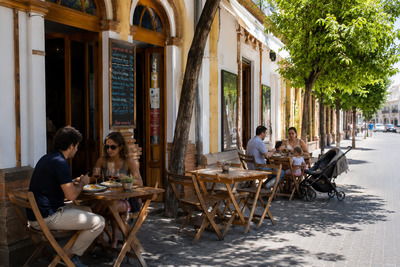
El Arenal is one of Seville's most distinctive areas for a food-focused walk. It stretches from the historic centre towards the Guadalquivir and retains a strong connection with the city's past: this was once Seville's main port, while today traditional bars, taverns and modern restaurants operate around the Plaza de Toros and the old streets.
There are particularly plenty of options here for discovering classic tapeo: from small abacerías — establishments where you can buy local produce and have a bite to eat — to freidurías, specialising in fried fish and seafood, as well as old tapas bars. Among the well-known places are Bodeguita Antonio Romero, where you should try piripi — warm bread with pork fillet, bacon and cheese — and Bodeguita Romero, known for its montadito de pringá — a small sandwich filled with stewed meat and cured meats.
Another important food spot is Mercado del Arenal on Calle Pastor y Landero. It is more than just a traditional food market: today, it also houses establishments offering different types of food, making the market easy to include in a walk around the area and combine with a stop for lunch or a light snack.
Triana
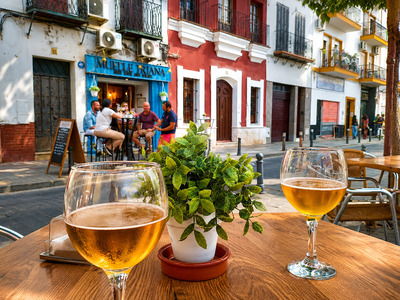
Triana is one of Seville's most distinctive districts, where food is closely connected with local life. On the other side of the Guadalquivir, the area has retained the special atmosphere of an old neighbourhood: bars and small restaurants stand alongside ceramics workshops, while evening terraces by the river become a natural continuation of a walk around the district.
For discovering the local cuisine, Mercado de Triana is particularly interesting — one of Seville's most traditional food markets, whose history dates back to the 19th century. Here you can buy fish, meat, vegetables, bread and local produce, while the market itself is home to bars where you can try salmorejo, pescaíto frito, ham, croquettes and other Sevillian dishes. The market offers a particularly good insight into the everyday food culture of Triana, where shopping, eating and socialising have long existed side by side.
Among the best-known local tapas bars are Las Golondrinas on Calle Pagés del Corro and Lola Cazerola on Calle Castilla. The area also has restaurants and bars with a more modern format, so Triana is suitable both for classic tapeo and for a more leisurely dinner.
Alameda de Hércules
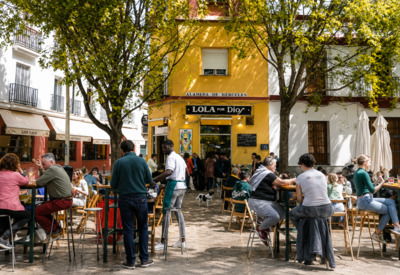
Alameda de Hércules is a completely different side of Seville's food scene. This large pedestrian square, with its centuries-old trees, terraces, bars and restaurants, has long been one of the liveliest and most informal places in the city. Here there is less of the feel of traditional tourist Seville and more everyday life, creativity and evening activity.
Around Alameda and on the neighbouring streets, you will find establishments in a wide range of formats: from classic tapas bars and small abacerías to modern restaurants and gastro bars. Among the addresses included in Seville's official food guide are Dúo Tapas on Calle Calatrava, Norte Andaluza right on Alameda de Hércules and conTenedor on Calle San Luis.
What else to see in Seville
Seville's food scene is easy to combine with walks through the historic centre and other experiences in the city. After lunch or an evening of tapeo, you can head to Seville's main monuments, go to a flamenco show or choose another way to spend your time.
- What to see in Seville — the city's main sights, historic districts and interesting places.
- Royal Alcázar in Seville — a magnificent palace complex with Moorish architecture, gardens and a rich history.
- Seville Cathedral — one of the city's main symbols, with the famous Giralda and historic cathedral interiors.
- Flamenco in Seville — where to see traditional tablaos, intimate performances and flamenco in Triana.
- Festivals and holidays in Seville — Semana Santa, Feria de Abril and other annual events that showcase the city’s traditions and atmosphere at their most vibrant.
- Street markets in Seville — atmospheric markets, local produce and another way to experience everyday life in the city.
- Museums in Seville — art collections, archaeology, flamenco, Andalusian traditions and the city’s unusual and fascinating museum spaces.
- Theme parks and family activities in Seville — ideas for spending time with children, including Isla Mágica, Seville Aquarium and other activities.

 English
  Español
  Русский