
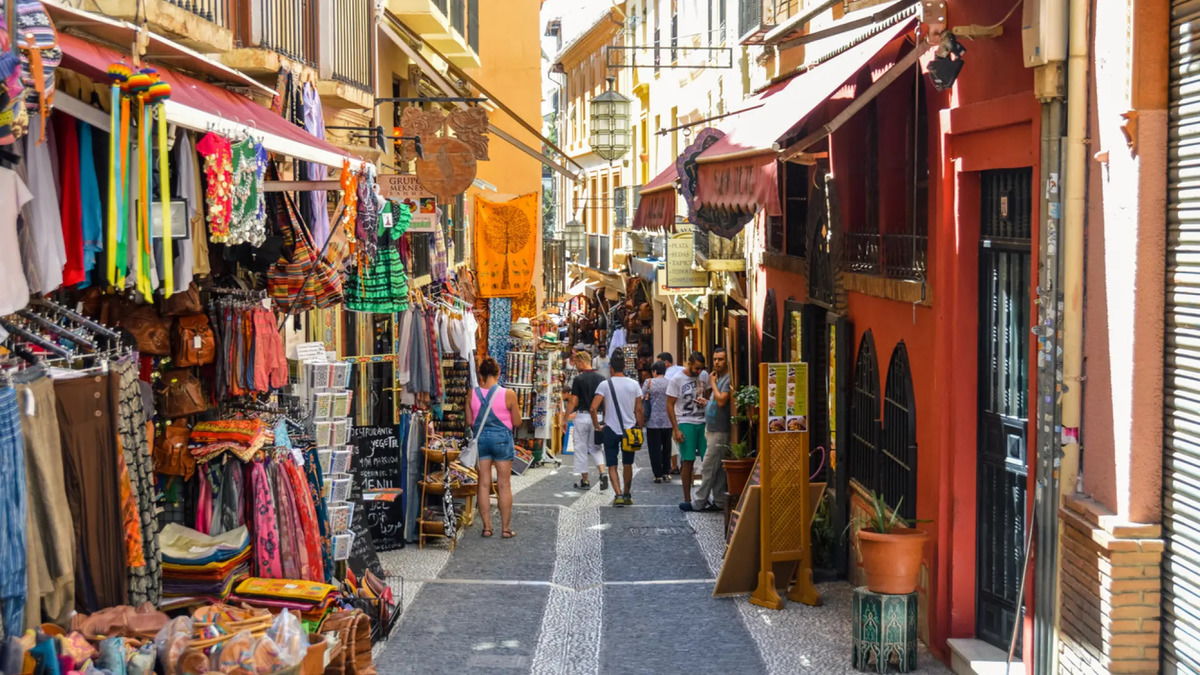
Markets of Granada offer an opportunity to see the city as local residents know it. While most tourists hurry to the Alhambra and the viewpoints of Albaicín, locals head to the city's markets in the morning for fresh produce, jamón, spices and seasonal fruit.
Here, you can not only buy local delicacies but also experience the everyday life of the city, see traditional food stalls and explore bustling street markets that have remained part of the local culture for many years.
If you would like to bring back something more than ordinary souvenirs from Granada, or simply enjoy discovering cities through their gastronomy, the markets will make an excellent addition to a walk through the historic centre.
In this guide, we will look at Granada’s main food markets, the historic Alcaicería and the most interesting street markets in the city and province.
Contents
- Alcaicería — Granada’s historic Arab market.
- San Agustín Market (Mercado San Agustín) — Granada’s main food market in the historic centre.
- Merca 80 Market — Granada’s second municipal market in the Zaidín district.
- Street Markets of Granada and the Province — the largest weekly markets in the region.
Alcaicería — Granada’s Historic Arab Market
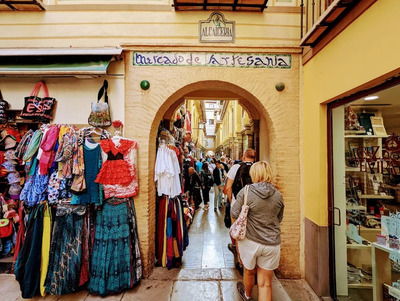
If there is one place where Granada’s Arab past can be felt most vividly, it is Alcaicería. Today, its narrow streets are lined with souvenir shops, tea stores, ceramics, handicrafts and Eastern sweets, but the history of this quarter stretches back several centuries.
During the Nasrid Emirate, this was the site of Granada’s famous silk market. The name Alcaicería itself comes from an Arabic word associated with trading privileges, and the area was once a true labyrinth of commercial streets visited by merchants from across the Mediterranean.
The original market was considerably larger than the one seen today and occupied a substantial part of Granada’s city centre. Following a major fire in the 19th century, much of the historic architecture was lost. However, a small section of the old market survived and was later restored in the traditional Andalusian-Moorish style.
Today, Alcaicería is considered one of the most atmospheric places in Granada’s historic centre. Visitors come here not so much for shopping as for a stroll through the narrow alleyways that resemble an Eastern bazaar. Here, you can buy spices, tea, ceramics, leather goods, Arab lamps and other unusual souvenirs that are difficult to find in ordinary tourist shops.
Thanks to its location near Granada Cathedral and Bib-Rambla Square, a visit to Alcaicería can easily be combined with a walk through the historic centre of Granada.
Good to know: Alcaicería remains lively throughout most of the day, although some smaller shops and workshops close for lunch. Therefore, if you would like to explore the market at a relaxed pace and visit all the shops that interest you, it is best to avoid the middle of the day.
San Agustín Market
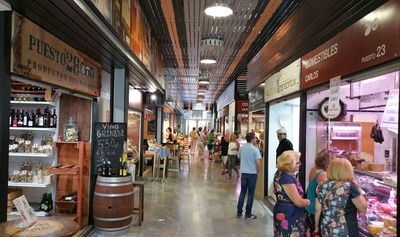
If Granada has one main food market that is worth visiting, it is Mercado San Agustín. Located just a few minutes’ walk from the Cathedral and the historic centre, it is an easy stop during a walk around the city.
The market stands on the site of the former San Agustín Monastery, which occupied this location for several centuries. Today, it is one of Granada’s best-known food markets, where both local residents and visitors shop on a daily basis.
Under one roof, you will find dozens of stalls selling jamón, cheeses, meat delicacies, fresh fish, seafood, fruit, vegetables, spices and traditional Andalusian products. It is an excellent place to see how important high-quality local ingredients are in Granada’s cuisine.
In addition to food stalls, the market is home to several small bars and gastronomic counters where visitors can enjoy a coffee, a refreshing drink or a light meal. Many people come specifically to sample local tapas, jamón, cheeses or dishes prepared with fresh seafood in a more relaxed setting than a traditional restaurant.
It is especially pleasant to visit during the morning, when the market is filled with the voices of traders, the aromas of fresh produce and the familiar bustle of everyday city life. Unlike many tourist-oriented markets in Spain, San Agustín has largely retained the atmosphere of a traditional local market that primarily serves the residents of Granada.
Even if you are not planning to buy anything, the market is worth visiting for the atmosphere alone. It is one of those places where you can briefly step away from the tourist routes and see everyday life in the city as the people of Granada themselves know it.
Good to know: most market stalls operate during the morning, so it is best to plan your visit before lunch, when the selection of products is at its widest.
Merca 80 Market
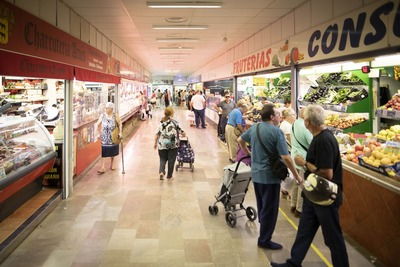
Merca 80 is Granada’s second municipal market and one of the city’s best-known food markets. It is located in the Zaidín district, close to the Nuevo Los Cármenes Stadium, and has remained an important part of local daily life for several decades.
The market opened in 1980, which is reflected in its name. Unlike the more tourist-oriented San Agustín Market in the historic centre, Merca 80 has retained the atmosphere of a traditional city market, where residents come to buy fresh produce and do their everyday shopping.
Under one roof, dozens of family-run stalls operate, many of which have been trading for many years. Here, visitors can find fresh fruit and vegetables, meat, fish and seafood, jamón, cheeses, olives, spices, baked goods and other traditional Andalusian products. The selection is aimed primarily at local shoppers, which often means prices are more attractive than those found in the city’s tourist areas.
It is particularly interesting to visit the market in the morning, when traders are actively chatting with regular customers and the stalls are filled with fresh produce. These are the moments when the atmosphere of everyday city life can best be experienced—something that is rarely seen while exploring the Alhambra or Granada’s historic centre.
Today, Merca 80 is considered one of Granada’s last major traditional markets to have preserved its original purpose. There is very little focus on tourism here, but it offers an excellent opportunity to see where and how local residents do their shopping.
Good to know: the market operates mainly during the morning, so it is best to visit early in the day when the full range of stalls is open.
Street Markets in Granada
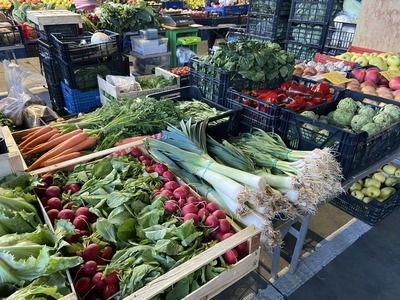
In addition to its permanent food markets, Granada and the surrounding area are home to numerous weekly street markets. Here, you can find affordable clothing, footwear, household goods, local produce, spices, olives, fruit and vegetables. These markets remain an important part of everyday life in Andalusia and offer a chance to experience a more authentic side of the region.
Most markets operate during the morning, so it is best to arrive early, when the selection of goods is at its widest and the streets are not yet too hot.
Almanjáyar Market (Mercadillo de Almanjáyar)
The largest and most visited street market in Granada has around 365 stalls. Here, you can find clothing, footwear, home textiles, accessories, household goods, toys, cosmetics, as well as fresh vegetables, fruit, spices and olives. The atmosphere is quite lively and chaotic, especially towards midday, but this is precisely what makes it one of the most colourful markets in the city.
When: Sundays from 9:00 am to 2:00 pm.
Zaidín Market (Mercadillo del Zaidín)
Zaidín Market is considered one of Granada’s best-known weekly markets. Since relocating to Baden Powell Street near the Fermasa exhibition centre, it has become even more convenient to visit. More than 150 stalls operate here, offering clothing, footwear, accessories, textiles, household goods, as well as fresh produce and seasonal fruit.
Thanks to its size, the market attracts not only local residents from the district but also shoppers from other parts of the city. The atmosphere here is calmer than at the vast Almanjáyar Market, which is why many people consider it one of the most comfortable markets in Granada for leisurely shopping.
This market should not be confused with the municipal Merca 80 market, which is also located in the Zaidín district but operates as a permanent food market.
When: Saturdays from 9:00 am to 2:00 pm.
La Chana Market (Mercadillo de La Chana)
This market is aimed primarily at local residents, but it may also be of interest to travellers who would like to experience everyday life in Granada. Fresh fruit and vegetables, affordable clothing, footwear, textiles and a variety of household goods are sold here.
When: Wednesdays from 9:00 am to 2:00 pm.
Flealejo Flea Market
While traditional markets are mainly associated with food and everyday shopping, Flealejo Market offers a completely different atmosphere. This popular flea market takes place in the Realejo district at Campo del Príncipe Square and attracts lovers of vintage items, records, books, jewellery and unusual objects with a story behind them.
Unlike the large weekly markets, Flealejo feels more like a local urban event, where shopping is combined with a stroll through one of Granada’s most atmospheric neighbourhoods. Here, visitors can find vintage clothing, decorative items, vinyl records, old books and a variety of handmade products.
Even if you are not planning to buy anything, the market is worth visiting for the atmosphere alone. After browsing the stalls, you can stop at one of the many bars and cafés in Realejo or continue exploring the city’s historic centre.
When: the first Sunday of every month, from morning until mid-afternoon.
Street Markets in Granada Province
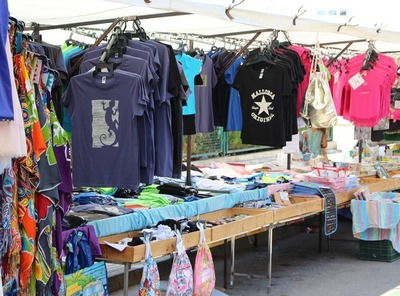
If you are travelling around the province by car, it is also worth exploring the larger markets outside the capital. Many of them are comparable in size to the city markets and offer an excellent opportunity to combine shopping with visits to interesting towns and resorts.
Guadix Market (Mercadillo de Guadix)
One of the largest markets in the province, with around 300 stalls. Here, you can find clothing, footwear, handbags, household goods, cheeses, cured meats, pickled products, nuts, sweets, flowers and seasonal produce. The market combines perfectly with a visit to Guadix itself, which is famous for its cave houses.
When: Saturdays from 9:00 am to 2:00 pm.
Almuñécar Market (Mercadillo de Almuñécar)
A popular market on the Costa Tropical coastline that many tourists visit during a trip to the seaside. In addition to clothing, footwear and accessories, visitors can find fresh mangoes, avocados and other seasonal fruits for which the Granada coast is well known.
When: Fridays from 9:00 am to 2:00 pm.
Motril Market (Mercadillo de Motril)
A large market in the principal town of the Costa Tropical. Products, clothing, footwear, flowers, household goods, cheeses, cured meats and local delicacies are all available here. If your trip includes a visit to the coast, Motril Market can be an excellent addition to your itinerary.
When: Tuesdays and Fridays from 9:00 am to 2:00 pm.
Motril Summer Market (Mercadillo de Verano)
During the summer months, an evening market with approximately 150 stalls operates on Poniente Beach. It is less a place for shopping and more an enjoyable seaside stroll with souvenirs, accessories and leisure items.
When: Wednesdays during the summer from 8:00 pm to 12:00 am.
Atarfe Market (Mercadillo de Atarfe)
One of the largest markets in the Granada metropolitan area, with around 120 stalls. It is ideal for those who would like to combine a trip around the outskirts of the city with a visit to a traditional Andalusian market.
When: Fridays from 9:00 am to 2:00 pm.
Continue Exploring the Gastronomy of Granada and Spain
If you are interested in local products, culinary traditions and the markets of Spain, we also recommend the following articles:
- Where to Eat in Granada and What to Try — tapas bars, traditional dishes, gastronomic districts and local drinks.
- Granada Attractions — the Alhambra, Albaicín, Sacromonte and other interesting places in the city.
- Traditional Andalusian Food — the most famous dishes of southern Spain and the region’s culinary traditions.
- Traditional Spanish Dishes — what to try during your travels around the country.
- Traditional Drinks of Spain — popular wines, beers, vermouths and other beverages from different regions of the country.
- Markets of Spain — the country’s most famous food, gastronomic and street markets.
- Street Markets in Madrid — the largest weekly markets in the Spanish capital, where you can find clothing, food, antiques and goods from across Spain.
- Gastronomic Markets of Madrid — markets and food halls in the Spanish capital.

 English
  Español
  Русский