
Walking along Passeig de Gràcia, it is impossible not to notice a building unlike any other in Barcelona. Its facade seems to shimmer in the sunlight, its balconies resemble mysterious masks, its roof looks like the back of a giant dragon, and its flowing lines create the impression that the stone has somehow come to life. This is Casa Batlló, also known as the Batlló House — one of Antoni Gaudí's most celebrated masterpieces and a UNESCO World Heritage Site.
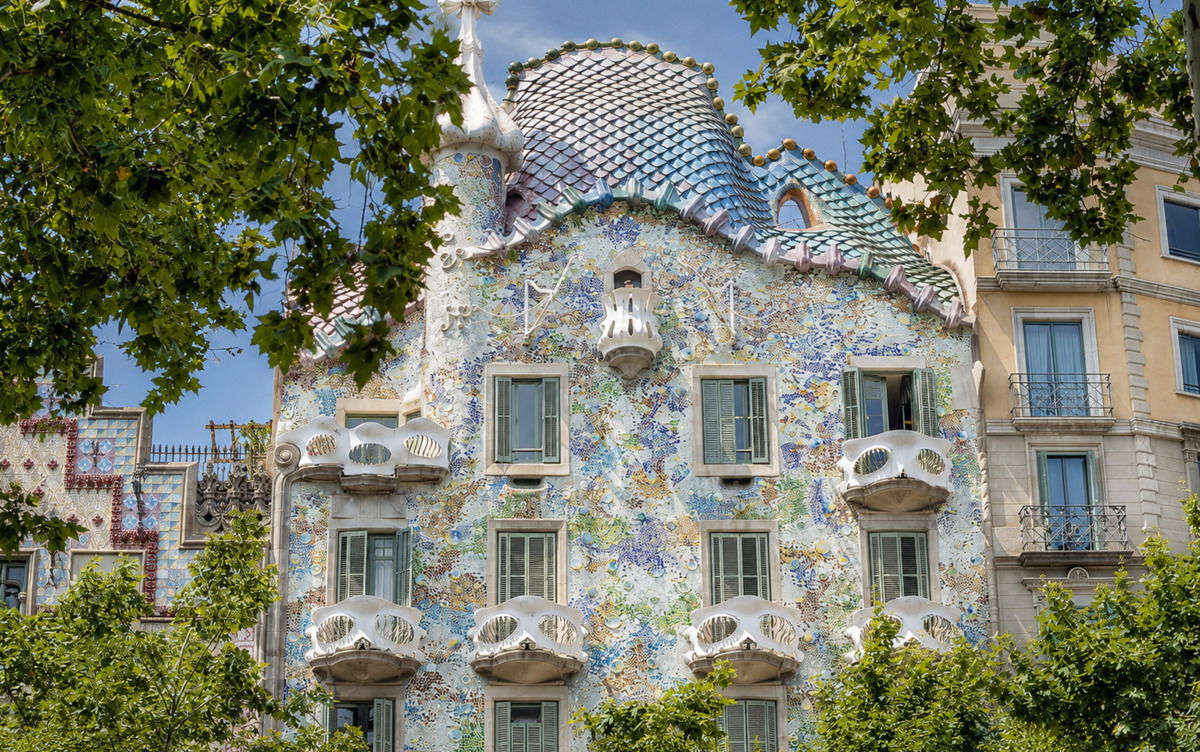
Even more than a century later, Casa Batlló continues to amaze visitors. Some see sea waves in its facade, others a fairy-tale castle, and still others the legendary dragon from the Catalan tale of Saint George. That is the unique quality of Gaudí's architecture: everyone sees something different, yet almost no one remains indifferent.
At first glance, Casa Batlló appears to be the product of the great architect's boundless imagination. However, behind its extraordinary forms lies the very real story of the transformation of an ordinary town house, while every detail of its facade and interiors has its own meaning. That is why a visit to Casa Batlló becomes much more than simply admiring a beautiful building — it is an opportunity to discover one of the boldest architectural experiments of the early twentieth century.
The History of Casa Batlló
Today, it is hard to imagine that one of Barcelona's most famous buildings once looked no different from its neighbours. At the beginning of the twentieth century, an ordinary apartment building stood on this site, one of many like it throughout the city. The decision not to demolish it but to transform it completely would eventually give Barcelona one of Antoni Gaudí's greatest architectural masterpieces.
The House That Was Never Demolished

In 1903, the textile industrialist Josep Batlló purchased the building on the prestigious Passeig de Gràcia. Although solidly built, it was no different from the surrounding properties. At first, the owner seriously considered demolishing it and constructing a new mansion that would reflect his family's status.
The project was entrusted to Antoni Gaudí. Instead of starting from scratch, the architect proposed a far bolder solution: to preserve the building's structural framework while radically transforming everything else. Within two years, the facade, interiors, roof, inner courtyards and layout had been altered so dramatically that the original building became almost unrecognisable.
In this way, Casa Batlló became far more than an elegant urban residence. It was transformed into a true work of art, where every detail formed part of a single artistic vision.
Why Casa Batlló Is Known as the House of the Dragon
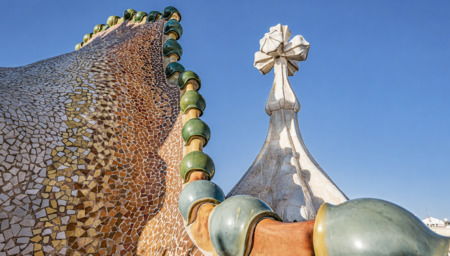
The most widely accepted interpretation of Casa Batlló's symbolism is linked to the legend of Saint George, the patron saint of Catalonia. According to the legend, Saint George defeated a fearsome dragon, saving both a princess and the townspeople. As this story is familiar to every Catalan, many scholars believe it inspired Gaudí when designing the building's facade.
Looking closely at the roof, it does indeed resemble the curved back of a giant dragon covered in colourful ceramic scales. The cross crowning the roof is often compared to the sword or lance with which Saint George defeated the dragon.
Other elements of the facade are equally striking. The balconies resemble masks or skulls, while the slender columns on the lower floors look like bones. For this reason, Casa Batlló is sometimes known not only as the House of the Dragon but also as the "House of Bones". Gaudí himself, however, never explained the meaning of his architectural choices, leaving room for countless interpretations.
Perhaps it is precisely this mystery that makes Casa Batlló so captivating. Even more than a century later, visitors continue to debate what the architect intended to express, discovering new details in this extraordinary facade with every visit.
What Awaits You Inside Casa Batlló
If the facade of Casa Batlló makes an unforgettable first impression, the interiors are even more remarkable. Here, it is almost impossible to find straight lines, conventional corners or identical rooms. Each space gradually reveals Antoni Gaudí's vision of a house where architecture follows the same principles as nature. As you make your way through the building, you seem to travel from the depths of the sea to the sunlit rooftop, discovering some of the architect's most extraordinary engineering and artistic achievements.
The Grand Staircase
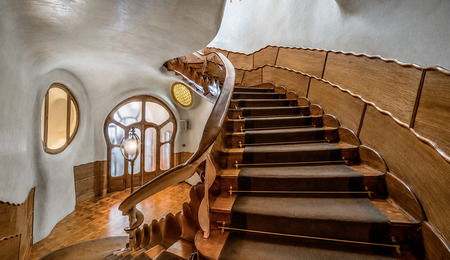
Your visit begins with the grand staircase, which immediately sets the tone for the entire house. Its wooden handrail curves gracefully like the spine of a giant sea creature, while the walls are free from conventional geometry. It feels as though the building was not constructed by human hands but grew naturally, following the laws of nature.
Gaudí paid meticulous attention not only to the building's appearance but also to how visitors would experience it. Thanks to its flowing lines, rounded forms and natural materials, the space feels remarkably calm and alive. From the very beginning, it becomes clear that this is far more than an ordinary tour of a historic house — it is a journey into the imagination of a great architect.
The Main Salon

The Main Salon was the heart of the Batlló family's home. Its large oval windows overlook Passeig de Gràcia, filling the room with natural light, while the coloured stained-glass windows create a gentle play of shades throughout the day. As a result, the interior constantly changes with the light.
It is also worth paying attention to the details. The ceiling resembles a whirlpool on the surface of the sea, the doors curve gracefully without a single sharp corner, and the wooden elements look as though they have been polished by ocean waves. It is here that Gaudí's desire to abandon rigid geometry in favour of natural organic forms becomes especially apparent.
💡 By using the augmented reality audio guide, you can see what the interiors looked like during the time of the Batlló family.
The Light Well
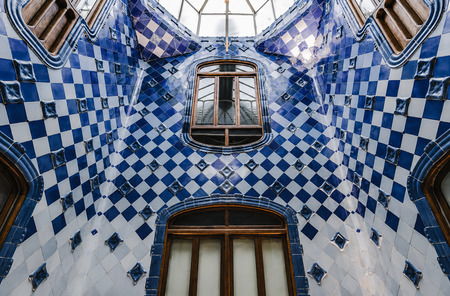
One of Antoni Gaudí's most ingenious creations is the central light well. At first glance, it appears to be simply a beautiful space lined with ceramic tiles, but behind its beauty lies an astonishingly precise piece of engineering.
The architect wanted every room in the house to receive the same amount of natural daylight. To achieve this, he clad the upper part of the light well with deep blue tiles, gradually using lighter shades towards the lower floors. Where sunlight was strongest, the darker tiles visually softened the brightness, while the lighter tones below helped brighten the lower levels. Thanks to this simple yet remarkably effective solution, daylight is distributed with extraordinary uniformity throughout the building.
Even more than a century later, this solution continues to impress architects and engineers alike, as Gaudí succeeded in combining beauty and functionality so perfectly that one cannot be separated from the other.
The Attic
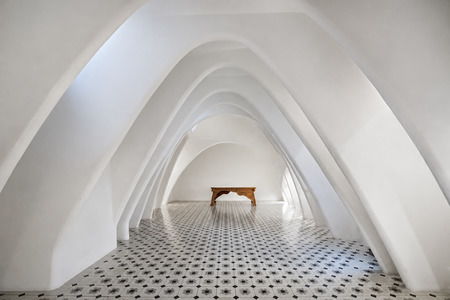
One of the most unexpected spaces in the house is the snow-white attic. There are almost no bright colours or decorative elements here — all the attention is focused on the long gallery of elegant parabolic arches.
Many people compare them to the ribs of a giant whale or the skeleton of an unknown sea creature. Thanks to the repeating arches, the space feels both light and endless. This area once housed the service rooms and laundry facilities, yet today the attic is considered one of the most photogenic parts of Casa Batlló and a striking example of how Gaudí transformed even the most practical spaces into works of art.
The Rooftop
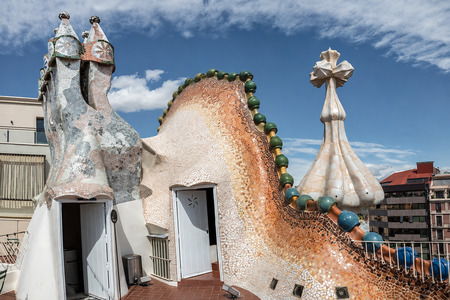
The visit concludes on the famous rooftop, which has long become one of Barcelona's most recognisable landmarks. From here, you get the best view of the curved "dragon's back" covered in colourful ceramic mosaics. The chimneys are equally remarkable: Gaudí transformed these ordinary functional structures into true sculptures that both decorate the building and protect it from strong winds.
The rooftop also offers beautiful views over central Barcelona and the neighbouring buildings of the Modernisme district. Many visitors spend the longest time here, taking one last look at the city through Antoni Gaudí's eyes and appreciating just how extraordinary his architecture truly was.
To enjoy the full route at a relaxed pace, make the most of the audio guide and explore the rooftop without rushing, it is best to choose a convenient visiting time in advance. This is particularly important during the peak tourist season, when the most popular time slots quickly become unavailable.
Tickets for Casa Batlló
Your choice of ticket depends on how you would like to experience Casa Batlló. Most visitors opt for a self-guided tour with an audio guide, which helps explain the symbolism of the interiors and Antoni Gaudí's architectural ideas. Those wishing to explore the house in greater depth can choose enhanced tickets that include access to additional areas, as well as guided tours led by an expert.
Casa Batlló operates on a timed-entry system, so you need to choose your visit date and time in advance. During the peak tourist season, the most convenient time slots, especially those in the morning, sell out quickly. If you would like to explore the house at a relaxed pace, make the most of the audio guide and enjoy the famous rooftop without rushing, it is best to book your tickets in advance.
What to See After Visiting Casa Batlló
Casa Batlló is located in the heart of Barcelona, so there is no need to end your day after the tour. Just a few minutes away, you will find other famous works by Antoni Gaudí, while a little further on are museums, historic neighbourhoods and landmarks that are essential to any visit to the Catalan capital.
- Casa Milà (La Pedrera) — Antoni Gaudí's last civil work, located just a few minutes' walk along Passeig de Gràcia. A perfect opportunity to compare the architect's two most famous residential buildings.
- Sagrada Família — Gaudí's greatest architectural masterpiece, where his ideas about nature, light and symbolism came together in a magnificent basilica.
- Park Güell — a chance to see how Gaudí's imagination extended beyond architecture to create an entire world where nature and art exist as one.
- The Picasso Museum — an opportunity to follow the artistic journey of the great painter and discover one of the world's finest collections of his early works.
- Barcelona's Top Attractions — a ready-made itinerary featuring the city's most fascinating sights, helping you plan a walk for one or several days.
- Where to Eat in Barcelona — discover the best Catalan dishes, popular restaurants and recommendations for where to enjoy a memorable meal after exploring the city.
This itinerary will allow you to continue discovering the work of Antoni Gaudí before exploring other sides of Barcelona — its museums, historic neighbourhoods and renowned Catalan gastronomy.

 English
  Español
  Русский