
Valencia's attractions are considered among the most diverse in Spain. Here, ancient monuments stand alongside futuristic architecture, while the historic quarters of the old town blend seamlessly into modern districts, parks and wide Mediterranean beaches.
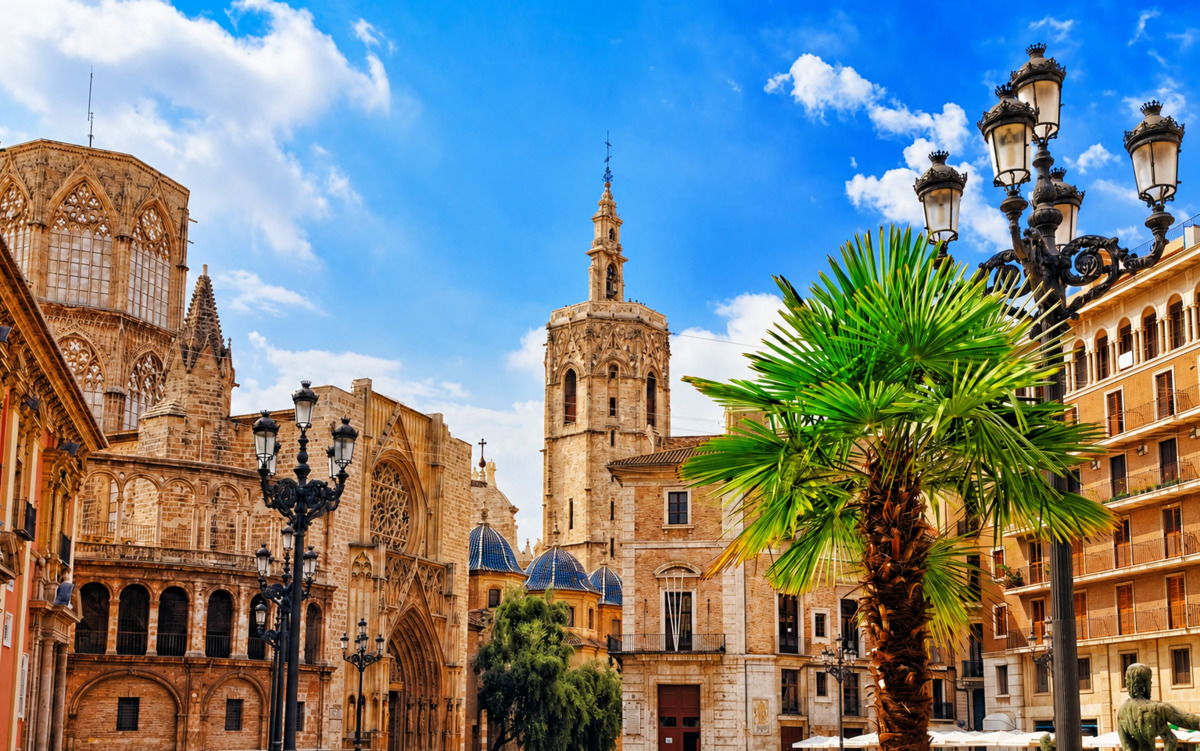
Valencia is the third-largest city in Spain and the capital of the Valencian Community. Founded by the Romans more than two thousand years ago, it has preserved traces of different historical periods. Here you can see the magnificent Cathedral, the famous Silk Exchange, a UNESCO World Heritage Site, and one of the most recognisable architectural complexes in modern Europe — the City of Arts and Sciences.
If you are planning a trip and deciding what to see in Valencia, this guide will help you create a convenient route through the city's main attractions. Below you will find the most interesting places, tips for exploring the historic centre, the best beaches in Valencia and useful information for an independent visit.
Contents:
- A Route Through Valencia's Main Attractions — the City of Arts and Sciences, the historic centre and the city's most interesting sights
- Valencia's Beaches — where to relax by the sea and which beaches to choose
- Where to Eat in Valencia and What to Try — paella, local cuisine and the city's gastronomic districts
- Parking and Visitor Tips — useful information for an independent trip
- What to See Near Valencia — Albufera, Sagunto and other interesting places in the region
A Route Through Valencia's Main Attractions
The main attractions of Valencia are located within walking distance of one another, and one day is often enough to explore the historic centre. At the same time, major modern complexes such as the City of Arts and Sciences may require a separate day or even several days.
City of Arts and Sciences (Ciudad de las Artes y las Ciencias)
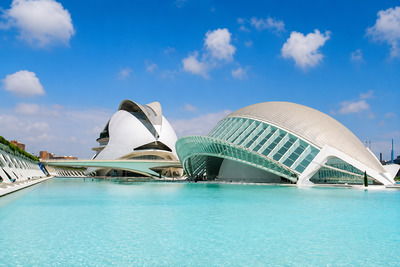
The City of Arts and Sciences is considered Valencia's main modern attraction and one of the most recognisable architectural complexes in Spain. Its futuristic buildings are the images most often seen on postcards, in travel guides and in photographs of the city.
The complex was built to the design of the renowned Valencian architect Santiago Calatrava and occupies a vast area on the site of the former Turia riverbed. The white structures reflected in turquoise pools create the impression of scenery from a science-fiction film and contrast sharply with Valencia's historic centre.
The site includes the Science Museum, the largest oceanographic park in Europe, the Hemisfèric planetarium, the Umbracle gallery and garden, the Queen Sofía Palace of the Arts and the multifunctional Ágora centre. Thanks to this variety, the complex is interesting for both adults and children.
It is truly a city within a city. If you plan to visit several of the buildings, it is worth setting aside a full day to explore the complex. Enthusiasts of science, architecture and marine life may find that even two days are not enough.
Even if you do not intend to visit the museums, it is worth coming here simply for a walk. In the evening, when the illumination is switched on, the City of Arts and Sciences looks particularly impressive and is considered one of the most photogenic places in Valencia.
More detailed information about each part of the complex, as well as current tickets, can be found on the City of Arts and Sciences in Valencia page.
After exploring the modern architecture, we will head to Valencia's historic centre, where the city's oldest monuments preserve more than two thousand years of history.
Turia Gardens (Jardín del Turia)
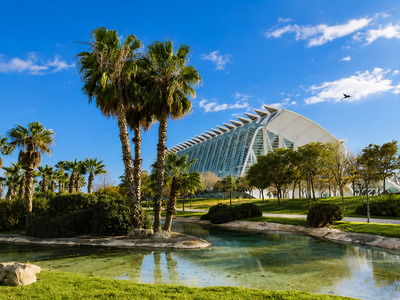
After exploring the futuristic City of Arts and Sciences, it is time to head to one of Valencia's most unusual places — the Turia Gardens. Today, this is one of the largest urban parks in Spain, but only a few decades ago a real river flowed here.
In 1957, Valencia experienced a devastating flood that caused serious damage to the city. Following this disaster, the decision was made to divert the Turia River and reroute it outside the city. The freed-up space was gradually transformed into a huge green area around 9 kilometres long, which today crosses Valencia from west to east.
Today, the Turia Gardens are considered one of the favourite recreational areas for local residents. The park features walking and cycling paths, sports facilities, leisure areas, and avenues lined with palm trees, orange trees and a wide variety of Mediterranean plants.
The park's unique atmosphere is enhanced by its historic bridges. A total of 18 bridges from different periods and architectural styles span the former riverbed — from medieval structures to modern constructions. As a result, a walk through the Turia is not only a chance to relax in nature but also a small journey through the city's history.
One of the park's most famous landmarks is the Gulliver playground. A giant figure of the hero from Jonathan Swift's novel lies on the ground, while his clothes, hair, arms and hat have been transformed into ladders, tunnels and slides. For children, it is a true adventure park, while for adults it is one of the most unusual playgrounds in all of Spain.
Even if you are travelling without children, a walk through the Turia Gardens is highly recommended. The park connects many of Valencia's main attractions and offers a completely different perspective of the city — greener, calmer and remarkably pleasant for walking.
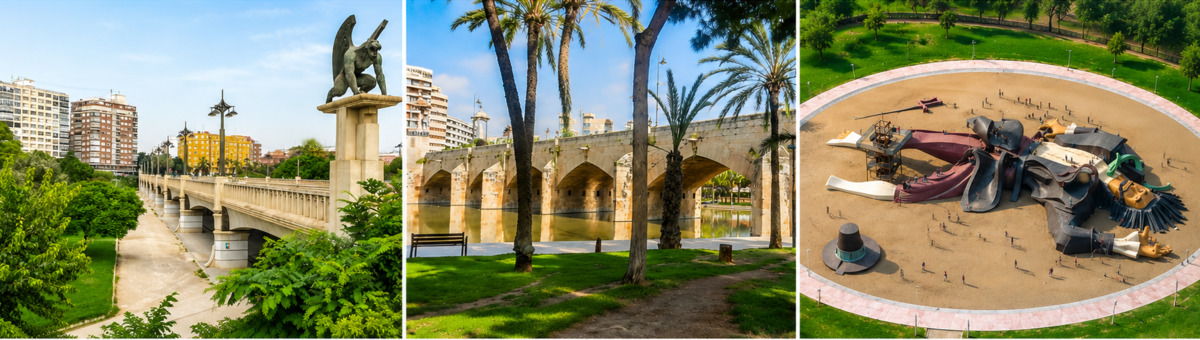
Continuing along the park, we gradually approach the old city walls and the Serranos Towers — one of the main symbols of medieval Valencia.
Serranos Towers (Torres de Serranos)
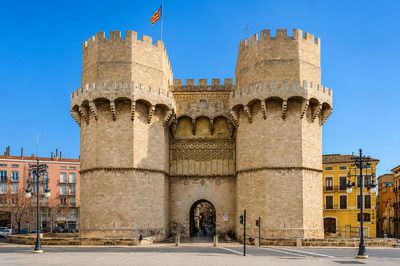
Walking along the Turia Gardens, it is impossible not to notice the imposing Serranos Towers — one of the main symbols of medieval Valencia. Once, this was one of the principal entrances to the city, and today it remains one of the most recognisable historic landmarks in Valencia's centre.
The towers were built at the end of the 14th century as part of the powerful city walls that surrounded Valencia. Merchants, travellers and ambassadors arriving in one of the wealthiest cities of the Mediterranean passed through these gates. During the golden age of the Kingdom of Valencia, the towers served not only as defensive structures but also as a display of the city's wealth and status.
Most of the city walls have not survived to the present day, but the Serranos Towers have endured through the centuries and allow visitors to imagine the scale of medieval Valencia. For a period, they were even used as a prison for members of the nobility.
Visitors can climb to the top if they wish. The viewing platform offers beautiful views over the Turia Gardens, the historic centre and the rooftops of the old town. The towers are especially impressive near sunset, when the warm light highlights their massive stone façades.
This is where the most atmospheric part of a walk through Valencia begins. Beyond the Serranos Towers lies El Carmen, the oldest district of the city, with its narrow streets, small squares and buildings that preserve memories of Valencia's Roman, Arab and medieval past.
Passing through the old gateway, we arrive in the very heart of historic Valencia — Plaza de la Virgen, where the city's history has been shaped for centuries.
Plaza de la Virgen
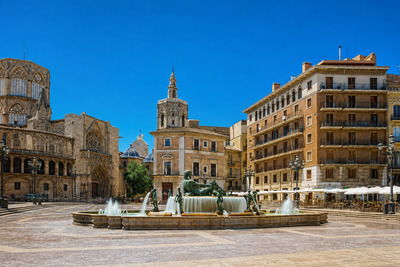
Plaza de la Virgen is one of the most beautiful and atmospheric places in Valencia. It is here that the city's history has been shaped for centuries.
It is believed that during the Roman Empire this site was occupied by the forum of ancient Valentia. Later, Arab quarters stood here, and after the Reconquista the square gradually became the religious and civic centre of the city.
At the centre of the square stands one of Valencia's most recognisable fountains — the Fuente del Turia. Its figures symbolise the Turia River and the irrigation canals that supported the region's agriculture for centuries.
Despite its immense historical importance, the square remains a vibrant part of modern Valencia. People meet here, relax at open-air cafés and simply enjoy the atmosphere of the old town. It is especially beautiful in the evening when the historic buildings are illuminated.
Today, the square is surrounded by several of Valencia's most important landmarks. Here you will find the Basilica of Our Lady of the Forsaken, one of the city's most revered religious sites, which houses the image of Valencia's patron saint. Nearby stands the Palau de la Generalitat, the historic seat of the Valencian Government and one of the finest examples of civil Gothic architecture in the region. Towering above the entire ensemble is Valencia Cathedral — one of the city's principal symbols and the next stop on our route.
Valencia Cathedral (Catedral de València)
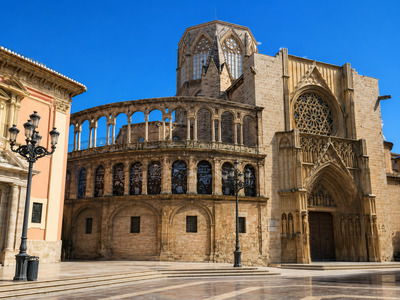
Standing on Plaza de la Virgen, it is impossible not to notice the magnificent Valencia Cathedral — one of the city's most important historical and religious landmarks. It is here that the layered history of Valencia becomes especially apparent.
The cathedral began to be built in the 13th century after the city was reconquered from the Moors. Interestingly, it was erected on the site of a former mosque, which itself had been built on the foundations of an ancient Roman sanctuary. As a result, the cathedral brings together several different eras of the city's history.
Construction continued for several centuries, which is why the architecture incorporates elements of Gothic, Renaissance, Baroque and Neoclassical styles. Despite this diversity, the building appears remarkably harmonious and is considered one of the most beautiful cathedrals in Spain.
The cathedral's interiors are particularly impressive. Inside, visitors can admire magnificent chapels, a richly decorated high altar and the famous frescoes depicting angel musicians, which were only rediscovered by restorers at the beginning of the 21st century.
However, the cathedral's most important relic is housed in the Chapel of the Holy Grail. Here stands a chalice that the Vatican has recognised as one of the most likely candidates for the Holy Grail — the vessel used during the Last Supper. Thanks to this relic, the cathedral attracts pilgrims and visitors from around the world every year.
If time allows, be sure to climb the Miguelete bell tower (El Micalet). After ascending several hundred steps, you will be rewarded with one of the finest panoramic views of Valencia's historic centre, overlooking the rooftops of the old town, its squares and the Turia Gardens.
Admission to the cathedral usually requires a ticket costing around €10, while access to the Miguelete bell tower is paid separately or included in some combined tickets. Tickets can be purchased on site, although queues are possible during the high season and on public holidays.
From the cathedral, the route continues to the Silk Exchange — a monument that recalls the era when Valencia was one of the wealthiest trading cities in the Mediterranean.
Silk Exchange (Lonja de la Seda)
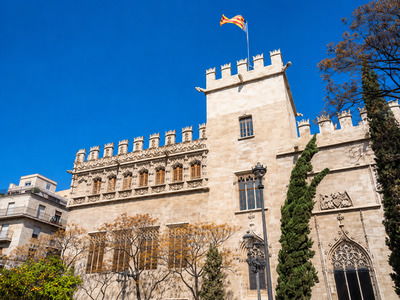
If Valencia Cathedral symbolises the city's spiritual history, then the Silk Exchange is a reminder of its period of economic prosperity. Today, it is one of Valencia's most famous landmarks and a UNESCO World Heritage Site.
The building was constructed at the end of the 15th century, when Valencia was considered one of the largest trading centres in the Mediterranean. At that time, the city was experiencing a true golden age: merchants arrived here from across Europe, and the silk trade brought enormous wealth to the region.
The Silk Exchange served as a place where commercial deals were concluded and as a symbol of the city's prosperity. It is no coincidence that its architecture was designed to impress visitors and emphasise Valencia's status as one of the most influential trading centres of its era.
The main trading hall is particularly impressive. Its tall twisted columns resemble tree trunks, while the vaulted ceilings create the feeling of a stone forest. It was here that some of the region's largest commercial transactions were concluded several centuries ago.
The building's façades are equally fascinating, with their numerous decorative details, sculptures and gargoyles. The inner orange-tree courtyard is also a pleasant place to pause for a moment and escape the bustle of the city among the trees and historic walls.
Admission to the Silk Exchange is very affordable — a standard ticket usually costs around €2. On Sundays and certain public holidays, entry is often free, so it is worth checking the current opening hours before your visit. A typical visit takes between 30 minutes and an hour.
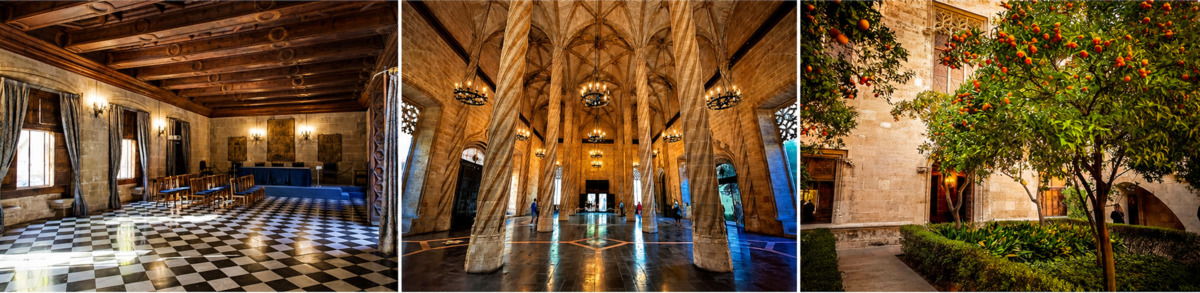
Even if you are not usually interested in architecture, the Silk Exchange leaves a strong impression. It is one of those places where you truly appreciate just how wealthy and influential Valencia was several centuries ago.
Directly opposite the Silk Exchange stands the Central Market — another place that has remained an important part of Valencia's daily life for many years.
Central Market (Mercado Central de Valencia)
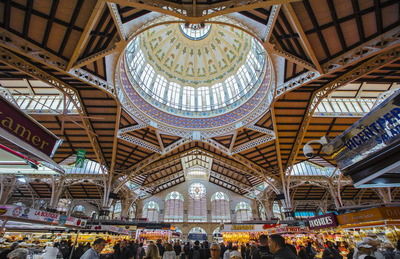
Directly opposite the Silk Exchange stands another iconic Valencia landmark — the Central Market. It is not only the city's largest municipal market, but also one of the finest examples of Art Nouveau architecture in Spain.
The market opened in 1928 and remains an important part of everyday life in Valencia. Beneath its impressive dome, covering more than 8,000 square metres, hundreds of market stalls serve local residents who have been buying fresh produce here for generations.
Even if you are not planning to buy anything, it is worth visiting simply for the atmosphere. Inside, you will find an enormous selection of fruit, vegetables, ham, cheeses, spices, fresh fish and seafood. Many of the products come directly from the surrounding countryside and the Albufera Natural Park.
The market building itself deserves special attention. Its high central dome, stained-glass windows, ceramic tiles and decorative details from the early 20th century make it one of the most beautiful attractions in Valencia's historic centre.
For many visitors, their introduction to Valencian gastronomy begins here. It is an excellent place to sample local delicacies, buy ingredients for a picnic or simply enjoy a coffee while observing everyday life in the city away from the usual tourist routes.
If you happen to be here on a Monday morning, take a look at the square in front of the market as well. Every Monday, a traditional street market in Valencia takes place here, where you can find clothing, accessories, souvenirs and products from local producers.
After exploring the historic centre, it is worth heading to Plaza del Ayuntamiento — the main square of modern Valencia.
Plaza del Ayuntamiento
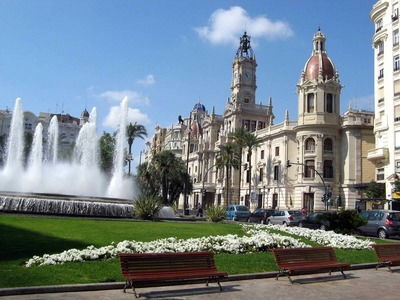
The ideal place to finish a walk through Valencia's historic centre is Plaza del Ayuntamiento, the city's main square. It is here that you can best experience the rhythm of modern Valencia, where historic architecture stands alongside shops, cafés and bustling city streets.
The square takes its name from Valencia's City Hall (Ayuntamiento), which is considered one of the most recognisable architectural landmarks in the city centre. Several other elegant early 20th-century buildings are located nearby, giving the square its particularly impressive appearance.
At the centre of the square stands a large fountain surrounded by carefully maintained flower displays, which have long become one of the hallmarks of this location. Numerous benches and open spaces make the square a popular place to relax for both local residents and visitors to Valencia.
However, the square is best known for the Fallas festival. It is here that the famous daily Mascletà fireworks displays and pyrotechnic performances take place, attracting thousands of spectators from around the world. During the festival, the square becomes one of the loudest and most vibrant places in all of Spain.
There are also many cafés and restaurants in the surrounding area where visitors can discover the traditional cuisine of the region. For many travellers, this is where they first taste authentic Valencian paella, the dish that is considered the city's gastronomic symbol.
If time permits, it is worth spending a little while here simply observing city life. After exploring Valencia's ancient districts, Plaza del Ayuntamiento reveals another side of the city — modern, dynamic and full of energy.
Valencia Beaches
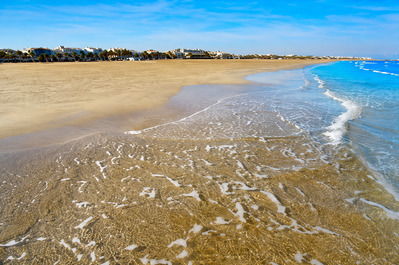
One of Valencia's greatest advantages is that it is easy to combine sightseeing with a relaxing day by the sea. After exploring the historic centre, you can reach the wide sandy beaches of the Mediterranean in just a few minutes.
Valencia's coastline stretches for more than 25 kilometres. Most of the beaches have been awarded the Blue Flag and are known for their clean sand, gentle access to the water and excellent facilities.
The most famous are the city beaches of Malvarrosa (Playa de la Malvarrosa) and Las Arenas (Playa de las Arenas), which are connected by the wide Paseo Marítimo seafront promenade. This is one of the most popular places for a walk in Valencia, especially in the morning and during the evening when the temperatures are cooler. Here you can stroll for several kilometres along the sea, stop at one of the restaurants, watch the sunset or simply enjoy the atmosphere of the Mediterranean coast.
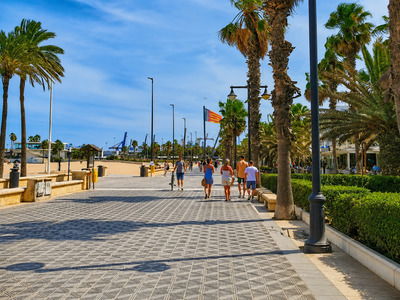
Those who prefer a quieter atmosphere should consider Patacona Beach (Patacona), located north of Malvarrosa. It is less crowded with tourists and is considered one of the favourite beaches among local residents.
If you would rather experience a more natural stretch of coastline, head to the beaches of the Albufera Natural Park, located south of the city. Here you will find no urban development, but instead wide dunes, pine groves and a much more peaceful atmosphere.
Virtually all of Valencia's urban beaches are equipped with showers, toilets, sports facilities, rental services and attractive promenades. Thanks to excellent transport links, they can easily be reached by bus or tram directly from the city centre.
Even if you are only visiting Valencia for one or two days, it is worth setting aside at least a few hours for a walk by the sea. It is precisely the combination of a historic centre, modern architecture and spacious Mediterranean beaches that makes Valencia one of the most comfortable cities in Spain for travellers.
Where to Eat in Valencia and What to Try
Valencia is considered one of Spain's leading gastronomic centres. It was here that the famous paella originated, and rice dishes have remained an important part of local culture for centuries. For this reason, no visit to the city is complete without exploring its cuisine.
The first dish you should try in Valencia is, of course, paella valenciana. Unlike the popular tourist versions made with seafood, the traditional Valencian paella is prepared with chicken, rabbit, green beans and other classic ingredients. For local residents, this is the recipe that represents the true paella.
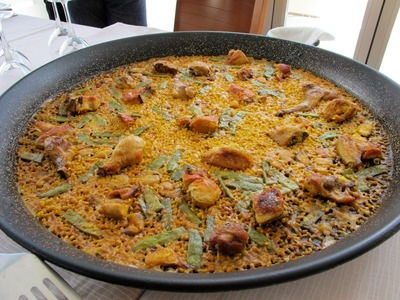
Interestingly, many Valencians recommend trying paella not in the city centre but closer to the beaches or in the Albufera Natural Park area, where the rice fields that gave birth to Valencian cuisine are located. It is there that you can experience the most authentic atmosphere of paella's homeland.
In addition to paella, it is worth paying attention to other traditional dishes of the region. One of the most popular is fideuà — a close relative of paella in which thin noodles are used instead of rice. Another local speciality is esgarraet, a tapas dish made from roasted peppers, salted cod and olive oil.
Seafood lovers will enjoy the many rice dishes found along the coast, including arroz a banda, arroz del senyoret and various rice dishes with seafood. Thanks to Valencia's proximity to the Mediterranean Sea, fish and seafood play a major role in the local gastronomy.
If you would like to discover Valencian cuisine in a single visit, the best place to start is the Central Market, which we have already visited on our route. Here you can see the ingredients used in many traditional regional dishes, sample local delicacies and gain a better understanding of the city's culinary traditions.
The Ruzafa district also deserves special attention. Today, it is often referred to as the gastronomic heart of modern Valencia. The area is home to numerous tapas bars, small family-run establishments, wine bars and restaurants specialising in contemporary Valencian cuisine. Many local residents come here in the evening when they want not only to enjoy dinner but also to experience the atmosphere of a lively city.
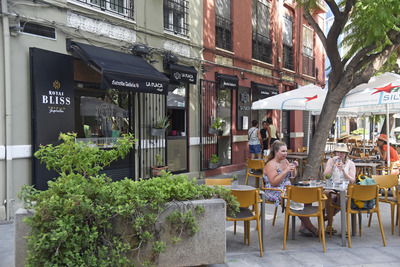
For dessert, be sure to try the famous horchata — a refreshing drink made from tiger nuts, which is considered one of Valencia's gastronomic icons. It is traditionally served with elongated sweet pastries called fartons, which are perfect for dipping into a chilled glass of horchata.
And finally, a small piece of advice from local residents: in Valencia, paella is traditionally eaten for lunch rather than dinner. For Valencians, it is not simply a dish but a part of centuries-old culture and family Sunday gatherings.
Parking and Useful Information for Visiting Valencia
Getting around the city: Valencia's historic centre is easy to explore on foot. Most of the main attractions are located close to one another, and public transport provides good connections between the city centre, the City of Arts and Sciences and the beaches. If you are travelling by car, it is usually best to leave your vehicle in a car park and continue exploring the city on foot.
Where to park in Valencia: It is best to avoid driving into the narrow streets of the Ciutat Vella district. More convenient options include car parks near the Turia Gardens, the Colón district or Plaza de España, from where you can quickly reach the main attractions on foot. If you plan to explore the historic centre, you can also use the underground car parks near the Central Market and Plaza del Ayuntamiento.
Free parking: One of the most popular areas for free parking is Paseo de la Alameda next to the Turia Gardens. From here, the historic centre can be reached on foot in around 15–20 minutes. Free parking spaces can also sometimes be found near Mestalla Stadium, Malvarrosa Beach and in certain parts of Ruzafa, although finding an available space close to the centre can be challenging.
Paid parking zones: Blue zones are paid parking areas intended for short-term parking. In many districts, orange and green zones are mainly reserved for local residents, so it is important to check the signs carefully before parking your vehicle in order to avoid a fine.
When to visit: Spring and autumn are generally the most comfortable seasons for exploring Valencia. During summer, temperatures frequently exceed +30°C, so it is best to plan sightseeing for the morning or evening and spend the hottest part of the day at the beach or in museums.
How much time to spend in Valencia: One full day is usually enough to explore the historic centre. If you would also like to visit the City of Arts and Sciences, the beaches, museums and enjoy the local gastronomy, it is advisable to spend two or three days in Valencia — or even longer.
Useful tip: If you are travelling around Spain by car, Valencia makes an excellent base for exploring the surrounding region. From here, it is easy to reach Albufera, Sagunto, Peñíscola, Cullera and many other interesting destinations within the Valencian Community.
What to See Near Valencia
If you have extra time, it is well worth exploring the area around Valencia. Within just a few dozen kilometres of the city, you will find natural parks, ancient fortresses, Mediterranean resorts and historic towns that are perfect for a day trip.
💡 To explore the region conveniently, consider using a hire car 🚗
- Albufera Natural Park, Sagunto and Other Interesting Places Near Valencia — the best ideas for day trips around the region.
- Valencia Theme Parks — the aquarium, biopark, water parks and family activities for both children and adults.
- Cullera — a seaside resort town with a castle, viewpoints and wide sandy beaches.
- Gandia — a popular resort destination with a historic centre, the Borgia Palace and extensive beaches.
- Oliva — a peaceful coastal town with the atmosphere of traditional Valencia and wide sandy beaches.
These excursions allow you to discover another side of the Valencian Community — from the rice fields of Albufera and the ancient Roman heritage of Sagunto to Mediterranean seaside resorts located just a short drive from the city.

 English
  Español
  Русский