
Madrid public transport is a convenient and well-organized system that allows you to travel quickly and affordably between the city’s main attractions, neighborhoods, and even the suburbs. The metro, buses, Cercanías commuter trains, and special airport express routes make getting around the Spanish capital easy, even for first-time visitors.
However, the ticketing system in Madrid differs from other Spanish cities, and tourists may find it difficult at first to understand the fares, transport zones, and types of passes. For example, the city uses the Tarjeta Multi card, 10-trip tickets, as well as special tourist passes with unlimited travel.
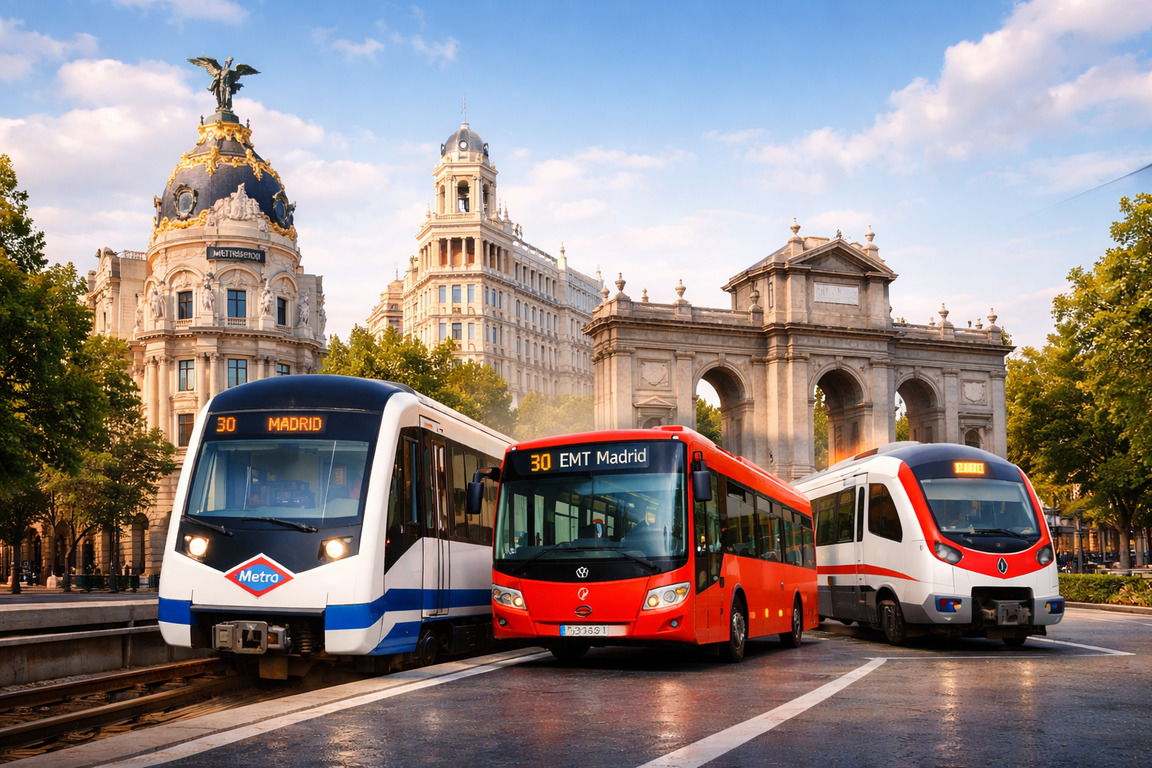
In this guide, we’ll explain how public transport in Madrid works, which tickets to choose, how much they cost, how to get from the airport, and which option is the most cost-effective for travelers.
How Public Transport Works in Madrid
Madrid’s public transport system is considered one of the most developed in Europe. It combines several modes of transport that complement each other, allowing convenient travel both within the city center and to more distant districts and suburbs.
Madrid Metro is the main and fastest way for tourists to get around. The metro network covers most of the city and connects major transport hubs, train stations, the airport, and popular attractions.
EMT city buses complement the metro and help you reach places not served by underground lines. They are especially convenient for short trips around the center and for evening routes.
Cercanías commuter trains allow fast travel between Madrid and nearby cities and are sometimes the quickest way to move between distant districts of the capital.
Unlike some other Spanish cities, Madrid’s fare system is based on transport zones. For most tourists, Zone A is sufficient, as it covers the central part of the city and the main attractions.
Next, we’ll look at the types of tickets available in Madrid and which option is best for travelers.
Main Transport Tickets and Cards in Madrid
There are several types of transport tickets available in Madrid, and choosing the right one depends on the length of your stay, how often you plan to travel, and your itinerary. Unlike in some other Spanish cities, Madrid uses a card-based system: most tickets do not exist as separate paper or plastic tickets but are loaded onto a special transport card.
Below, we’ll review the main options most commonly used by tourists.
Tarjeta Multi — Madrid Transport Card
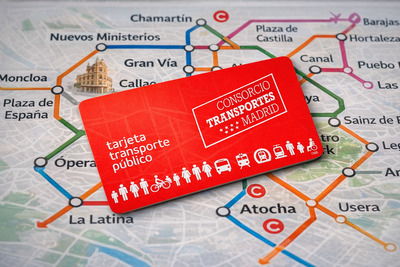
Tarjeta Multi is a reusable plastic card that serves as a ticket carrier. It is not a travel pass itself but works as an electronic holder onto which different types of transport tickets are loaded.
The card can be purchased from metro machines, at some stations, and at official sales points. After purchase, you can load 10-trip tickets, single tickets, tourist passes, and other transport products onto it.
For tourists, Tarjeta Multi is convenient because it can be reused and topped up as needed during the trip.
10-trip ticket (MetroBus)
One of the most popular options is the 10-trip ticket, often called MetroBus. It is valid in Zone A and allows travel on the metro and EMT city buses.
This ticket is suitable for those who plan to move around the city frequently but do not want to buy an unlimited pass. Unlike some tickets in other Spanish cities, MetroBus can be used by multiple people if traveling together — simply pass the card when entering.
Tourist travel pass (Abono Turístico)
For travelers who plan to move around a lot in a short period of time, there is the Abono Turístico tourist pass. It provides unlimited travel on most types of public transport for a selected number of days.
This option can be cost-effective for a busy sightseeing schedule or if you need to use transport frequently.
💡 Important: MetroBus and Abono Turístico are not separate plastic cards. They are loaded onto the Tarjeta Multi transport card, which is used as a universal ticket carrier in Madrid.
How to Get from Madrid Airport to the City Centre
Adolfo Suárez Madrid-Barajas Airport is located approximately 12–15 kilometers from the city center and is well connected to the public transport system. Tourists can choose between the metro, commuter train, and a special express bus.
Metro
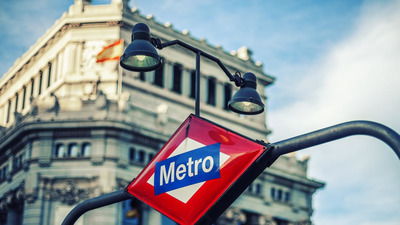
The metro is one of the most popular ways to reach the center. Line 8 connects the airport with central interchange stations. However, it is important to note that an additional airport supplement is charged on top of the standard fare.
If you use a 10-trip ticket (MetroBus), an extra fee for the airport section will be required. This should be taken into account when planning your travel budget.
Cercanías train
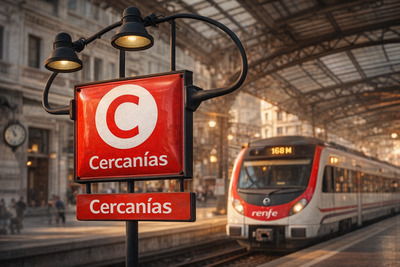
Cercanías commuter trains depart from Terminal T4 and can be a convenient and fast way to reach central stations in Madrid. In some cases, the train is faster than the metro, especially during peak hours.
This option is often chosen by travelers heading to Atocha or Chamartín stations.
Aeropuerto Exprés express bus
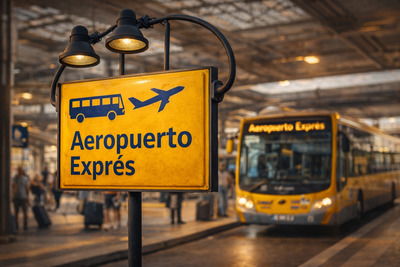
The 24-hour Aeropuerto Exprés bus connects the airport with the city center. It is convenient for night arrivals and departures when the metro is not operating.
The bus makes several stops in the center, including the Atocha station area, making it a convenient option for tourists.
The choice of transport depends on arrival time, budget, and final destination. Next, we will look at which way of getting around Madrid is the most cost-effective for travelers.
The Cheapest Way to Get Around Madrid
Madrid’s public transport system is considered one of the most convenient and affordable in Europe. For tourists who plan to move around the city actively, choosing the right ticket can significantly reduce travel expenses.
Unlike Barcelona, where the T-casual ticket is popular, in Madrid the main cost-effective option is considered to be the MetroBus — 10-trip ticket. It allows you to save money on each journey compared to single tickets and is suitable for the metro and city buses.
MetroBus Ticket (10 trips)
MetroBus is one of the most popular tickets among tourists and locals. It is valid in Zone A, which includes central Madrid and most of the main attractions.
- 10 trips for a fixed price
- can be used on the metro and EMT city buses
- the cost per trip is significantly lower than a single ticket
- the ticket can be used by multiple people
This makes MetroBus an excellent choice for short trips around the city and sightseeing.
Tourist travel pass (Abono Turístico)
If you plan to use transport intensively and make many trips during the day, it is worth considering the Abono Turístico tourist pass. It provides unlimited travel for a selected number of days.
- valid on the metro, buses, trams, and some suburban lines
- options for 1, 2, 3, 5, or 7 days
- suitable for an active itinerary with frequent travel
What should a tourist choose?
If you plan relaxed walks and just a few trips per day — MetroBus is usually the most cost-effective option.
If your itinerary is packed and includes frequent travel between different districts — the tourist pass may be a more convenient solution.
How to Buy a Ticket or Transport Card in Madrid
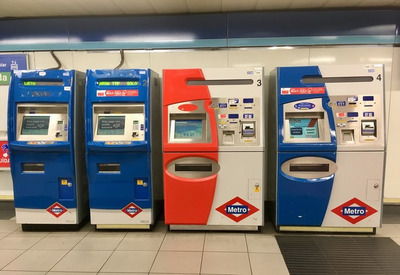
Buying public transport tickets in Madrid is quite simple, even if it’s your first time in the city. There are several convenient options suitable for tourists.
💡Important: in Madrid, you first purchase the Tarjeta Multi transport card (if you don’t already have one), and then load your chosen ticket onto it — for example, a 10-trip ticket (MetroBus) or a tourist pass (Abono Turístico).
1. Metro ticket machines
The most popular method is to use ticket machines in the metro. They are available at all stations and support multiple languages, including English.
- accept bank cards and cash
- you can select the type of ticket (single, 10 trips, tourist pass)
- simple step-by-step navigation
If you plan to use transport for several days, you first need to purchase the reusable Tarjeta Multi card, onto which tickets are then loaded.
2. Ticket offices at metro stations
Ticket offices operate at major stations where staff can help you choose the right ticket. This is a good option if you are unsure which fare to select.
3. Tobacco shops and official sales points
The Tarjeta Multi card and some tickets can be purchased at official sales points and tobacco shops (estancos) located throughout the city.
4. Buying a ticket at the airport
Madrid Airport also has metro ticket machines. However, it is important to remember that an additional airport supplement may apply when traveling from the airport.
Useful tip
Keep your Tarjeta Multi card after your trip — it is reusable and may be useful for your next visit to Madrid.
Madrid Transport Zones: What Tourists Need to Know
Madrid’s public transport is divided into fare zones, which affect ticket prices. However, most tourists do not need to understand all zones in detail — it is enough to know the basic principle.
Zone A — the main zone for travelers
Zone A covers central Madrid and most districts where the city’s main attractions are located. This zone includes:
- the city center and historic districts
- Prado, Reina Sofía, and Thyssen-Bornemisza museums
- Retiro Park
- Royal Palace and Puerta del Sol square
- Salamanca, Chueca, Malasaña, and La Latina neighborhoods
For most tourists, tickets valid in Zone A are sufficient.
Other transport zones
Outside the city center, there are additional zones (B1, B2, B3, and others) that cover suburbs and more distant areas. They are relevant if you plan to travel outside the city — for example, to Alcalá de Henares or other suburban destinations.
Airport and zones
Madrid Airport is located in Zone A; however, when using the metro, an additional airport supplement may be charged, which should be taken into account when purchasing a ticket.
Conclusion for tourists
If you plan to visit Madrid’s main attractions, tickets valid in Zone A are usually sufficient — this is the simplest and most cost-effective option.
The Cheapest Way to Get from Madrid Airport
Adolfo Suárez Madrid-Barajas Airport is located approximately 12–15 kilometers from the city center. There are several ways to reach the center, and the choice depends on arrival time, budget, and final destination.
1. Cercanías train — often the most cost-effective option
If you arrive at Terminal T4, the Cercanías commuter train can be the most convenient and economical option. It quickly takes passengers to central stations, including Atocha and Chamartín.
- fast connection to the center
- convenient for travel to major train stations
- often cheaper than alternative options
2. Metro (Line 8)
The metro connects the airport with the city center via Line 8. This is a convenient option, especially if your final destination is located on an interchange metro line.
However, it is important to remember that an additional airport supplement is charged when traveling from the airport. Therefore, the total cost of the trip will be higher than a standard Zone A ticket.
3. Aeropuerto Exprés express bus
The 24-hour Aeropuerto Exprés bus runs between the airport and central Madrid, including the Atocha station area. This is a good option for night arrivals when the metro is no longer operating.
- operates 24 hours a day
- does not depend on metro transfers
- suitable for travelers with luggage
What should you choose?
If you arrive at T4 and are heading to the center — the Cercanías train is often the most cost-effective and fastest option.
If the metro is more convenient and your route requires transfers — you can choose Line 8, taking into account the airport supplement.
For night arrivals or when traveling with large luggage, the express bus is a convenient solution.
Comparison of Madrid Transport Tickets: What Should a Tourist Choose?
| Ticket | Who it’s suitable for | Main advantages | When to choose |
|---|---|---|---|
| 10 Viajes (MetroBus) | Tourists and short trips | Cheaper than single tickets, 10 trips | If you plan several trips per day |
| Abono Turístico | Active tourists | Unlimited travel for selected days | Many attractions in a short period |
| Single ticket | Occasional trips | Simple purchase | If you plan to walk most of the time |
| Cercanías | Trips from the airport or suburbs | Fast and often cheaper than the metro | Airport T4 or travel between train stations |
How Tourists Can Pay Less for Transport in Madrid — Useful Tips
Public transport in Madrid is considered one of the most convenient and affordable in Europe; however, even here you can save significantly if you know a few simple rules.
1. Buy a 10-trip ticket instead of single tickets
The 10 Viajes (MetroBus) ticket is often much more cost-effective than standard single trips. It is valid on the metro and EMT buses and helps reduce the cost per journey.
2. Use Cercanías for fast travel
Cercanías commuter trains are part of the transport system and sometimes allow you to reach your destination faster than the metro — for example, between major stations or from the airport (T4).
3. Plan routes using Google Maps or Citymapper
These apps show optimal transfers and often suggest faster route options, including buses and trains.
4. Avoid peak hours
During morning and evening rush hours, the metro can be very crowded. If possible, plan sightseeing outside peak times — your trip will be more comfortable.
5. Check whether the airport is included in your fare zone
Some tickets require an additional supplement for airport travel. Check the conditions in advance to avoid surprises.
Where to Go from Madrid and What to See Next
Now that we’ve covered Madrid transport, you can start planning routes around the city and its surroundings. Thanks to the developed system of metro, buses, and Cercanías commuter trains, it is easy to visit both the main attractions of the capital and beautiful cities near Madrid.
- Main attractions of Madrid — a route through the most interesting places in the city.
- Madrid’s gastronomic markets — where to try local cuisine and experience the city’s atmosphere.
- Toledo — a historic city near Madrid, ideal for a day trip.
- Segovia — famous for its aqueduct and historic architecture.
- Ávila — medieval walls and the atmosphere of old Spain.
- Aranjuez — royal palace and scenic walks.
- Madrid theme parks — ideas for family trips.

 English
  Español
  Русский