
Jerez de la Frontera is one of the most atmospheric cities in Andalusia, renowned far beyond Spain for its famous sherry, Andalusian horses and the art of flamenco. Despite its rich history and numerous fascinating attractions, many travellers unfairly overlook it in favour of the better-known coastal cities.
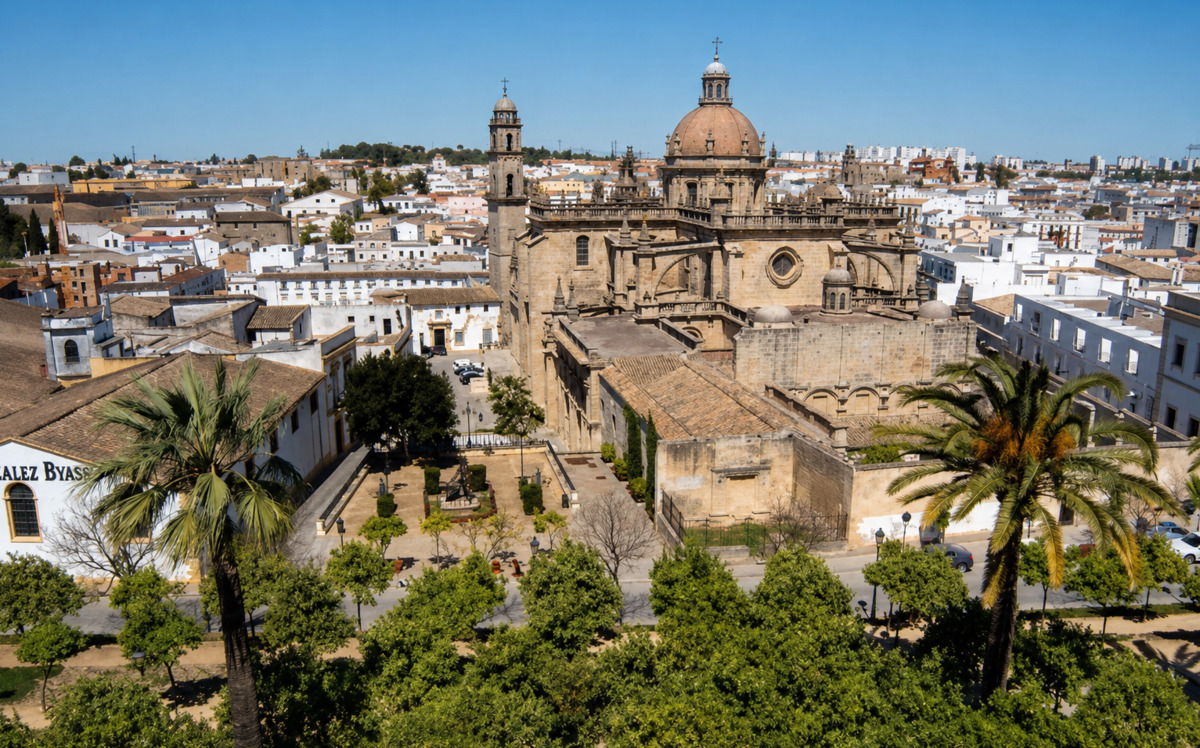
In reality, Jerez is every bit as capable of surprising visitors as Seville or Cádiz. The city is home to elegant historic palaces, an impressive Moorish fortress, a magnificent cathedral and charming squares, while a walk through its historic centre offers the authentic atmosphere of southern Spain that draws so many visitors to Andalusia.
In this guide, we will show you what to see in Jerez de la Frontera, which attractions deserve special attention and why this city should be included in your itinerary through the Province of Cádiz.
- Top attractions in Jerez
- Jerez Wine Cellars (Bodegas)
- The Royal Andalusian School of Equestrian Art
- Flamenco in Jerez
- Where to Eat in Jerez and What to Try
Top attractions in Jerez
Jerez de la Frontera is not a particularly large city, so most of its main attractions can comfortably be explored in a single day. If this is your first visit, the best place to begin is the historic centre and Plaza del Arenal. This is the heart of Jerez, and many of the city's highlights are just a few minutes' walk from one another, making it easy to combine a stroll through the old streets with visits to the Alcázar, the cathedral and the city's famous wine cellars.
Plaza del Arenal and the historic centre
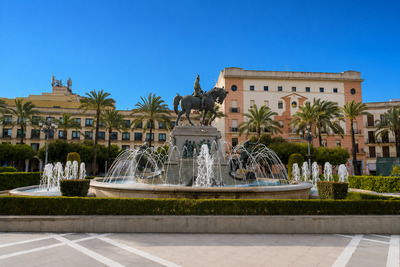
The best place to begin exploring Jerez is right here. Plaza del Arenal is regarded as the city's main public square and has remained a gathering place for celebrations and important civic events for several centuries. The square takes its name from the Spanish word arena ("sand"), as it was once the venue for medieval tournaments and military exercises.
Today, the square has a completely different appearance. Wide pedestrian areas, palm trees, fountains, café terraces and historic buildings create a pleasant setting for a stroll. Many visitors begin their exploration of Jerez here, as the Alcázar, the cathedral and many of the city's other attractions are all just a few minutes' walk away.
Interestingly, this is also where Jerez's connection with its greatest symbol — its world-famous sherry — is most apparent. Many historic bodegas are located just a few streets away, while the names of local streets and buildings often reflect the city's centuries-old winemaking heritage.
💡 If you happen to be in Jerez on a Sunday, it is well worth including a visit to the Rastro de Jerez, one of the best-known flea markets in the Province of Cádiz. It takes place close to the Alcázar and the historic quarters, making it easy to include in your itinerary. Even if you are not planning to buy anything, the market is worth visiting for its atmosphere, antiques, collectibles and the opportunity to experience another side of everyday life in Andalusia.
The Alcázar of Jerez
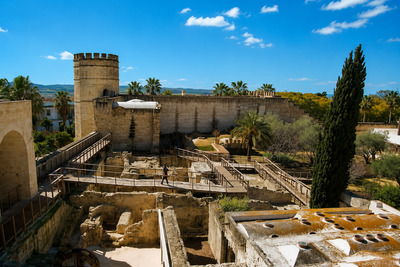
One of Jerez's most important historic landmarks is the Alcázar, an ancient Moorish fortress built in the 12th century during the Almohad period. It is one of the few major Islamic fortifications in Andalusia to have survived in such an excellent state of preservation.
The fortress occupies a strategic position beside the historic centre and once functioned as a city within a city. Behind its walls stood residential quarters, baths, a mosque, gardens, storehouses and defensive structures. After the Reconquista, the Alcázar came under Christian rule, and parts of the complex were rebuilt in keeping with the architectural traditions of the period.
Today, visitors can walk along the fortress walls, climb the Octagonal Tower (Torre Octogonal), explore the ancient mosque — one of the very few surviving mosques from the former Muslim Al-Andalus — and visit the Arab Baths. Despite being more than eight centuries old, many parts of the complex have been remarkably well preserved.
The gardens of the Alcázar are particularly impressive. Fountains, palm trees, orange trees and beautifully maintained pathways create a peaceful atmosphere, allowing visitors to forget for a while that a modern city lies just beyond the fortress walls. The upper terraces also offer beautiful views over the historic centre of Jerez, its church towers and its winemaking district.
Even if history is not your main interest, the Alcázar is well worth visiting for its unique atmosphere alone. It is one of those places where the centuries-old history of Andalusia and the blending of Moorish and Christian heritage, which shaped the character of modern Jerez, can be felt especially vividly.
Jerez Cathedral
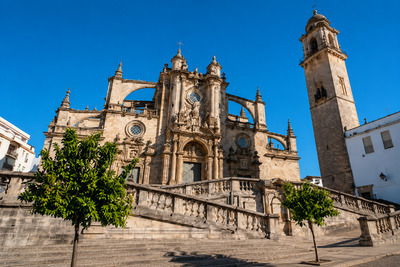
Just a few minutes' walk from the Alcázar stands Jerez Cathedral (Catedral de San Salvador), one of the city's most iconic landmarks. Thanks to its location beside the fortress, these two attractions are usually visited during the same walk, taking visitors from Jerez's Islamic heritage to its Christian history.
The cathedral was built between the 17th and 18th centuries on the site of the former Great Mosque, which was converted into a church after the Reconquista. Today, it is one of Andalusia's most fascinating architectural monuments, harmoniously combining several styles, including Gothic, Baroque and Neoclassical. This remarkable blend of influences gives the building a different appearance from every angle and makes it one of the most recognisable landmarks in Jerez.
The interior is just as impressive as the exterior. Its spacious, light-filled nave is decorated with religious works of art, among which the paintings of the renowned Spanish artist Francisco de Zurbarán stand out in particular. Admission to the cathedral is charged, but the ticket usually includes access to the bell tower, from which there are beautiful views over the historic centre, the Alcázar and the rooftops of old Jerez.
Be sure to spend a little time in the square in front of the cathedral. It offers one of the finest views of the cathedral's monumental dome, while the combination of the ancient walls of the Alcázar and the cathedral's façade perfectly illustrates how Jerez has evolved over the centuries and how the different cultures that shaped the city's history have become intertwined.
If you are interested in the history of medieval Jerez, it is worth taking a short walk from the cathedral to Plaza del Arroyo and the nearby Arco del Arroyo. The walk takes only about 5–10 minutes. The square itself is quite modest and is not among the city's most spectacular sights, but it is home to the only surviving medieval city gate of Jerez. Architecturally, the arch is fairly simple, yet its historical importance is difficult to overstate, as it once formed one of the main entrances to the walled city.
If you are short on time, however, you can comfortably continue your walk towards the San Miguel district. It is here that you will find one of Jerez's most beautiful churches, which many locals consider every bit as impressive as the cathedral.
San Miguel Church
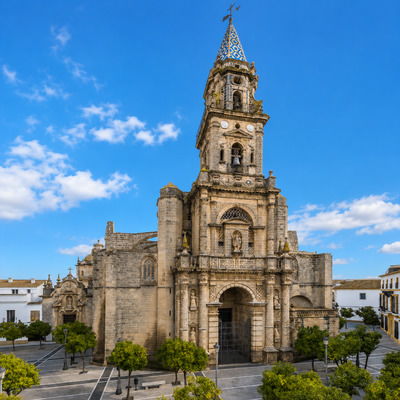
From the cathedral, it is only a short walk through the historic streets to reach the San Miguel district, one of the most characterful neighbourhoods in Jerez. Here you will find the Church of San Miguel (Iglesia de San Miguel), regarded by many as one of the finest churches in Andalusia and a true architectural treasure of the city.
The church was built over several centuries, from the 15th to the 17th century, resulting in a remarkable blend of Late Gothic, Renaissance and Baroque architecture. Its richly decorated main façade is particularly striking and is considered one of the finest examples of Andalusian Baroque. The tall bell tower has long been one of the most recognisable features of Jerez's skyline.
Inside, visitors can admire soaring vaulted ceilings, historic chapels, intricately carved altarpieces and fine religious artworks, although admission is charged. The entrance fee is usually around €6–8. If you prefer a leisurely walk through the historic centre, however, simply admiring the church from the outside is well worthwhile. Its richly ornamented façade, elegant bell tower and the charming square in front create an equally memorable impression and make it one of Jerez's most beautiful architectural landmarks.
Afterwards, be sure to explore the San Miguel district itself. Its narrow cobbled streets, small squares, traditional Andalusian houses and welcoming bars make this one of the city's most atmospheric neighbourhoods. It is here that the relaxed pace of life in Jerez is felt most strongly.
Interestingly, the San Miguel district is regarded as one of the historic birthplaces of flamenco in Andalusia. Many celebrated performers were born here, and the traditions of this art form have been passed down from generation to generation. A walk through the neighbourhood therefore offers the chance to discover not only the architecture of Jerez but also its rich cultural heritage.
The wine cellars of Jerez
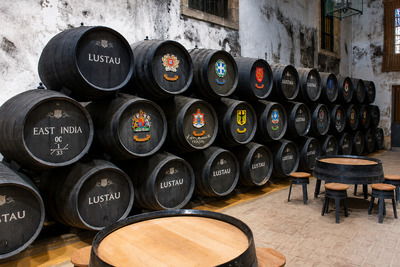
After exploring the historic centre, Jerez reveals an entirely different side of itself. While the Alcázar, the cathedral and the old quarters tell the story of the city's long history, the wine cellars offer an insight into what has made the name of Jerez famous throughout the world.
It is here that the world-famous fortified wine known as sherry has been produced for centuries. Exported to dozens of countries, it has long been regarded as one of Spain's most iconic wines. The English word sherry itself originates from the Spanish name Jerez, which English speakers pronounced and wrote in their own way over the centuries.
Today, most of the historic bodegas are open to visitors. During a guided tour, you can explore vast wine cellars filled with oak casks, learn how sherry is aged using the unique solera and criadera system, discover the history of local winemaking and, if you wish, enjoy a tasting of different styles of this famous wine.
Among the city's best-known wineries, González Byass (Tío Pepe), Fundador and Lustau are particularly popular. Almost all of them offer guided tours in several languages, making it easy to choose the option that suits you best.
Anyone can visit the wineries. Usually, all you need to do is choose the bodega you would like to visit, buy a ticket for the next available tour or book a convenient time in advance through the official website. Visitors are then guided through the historic wine cellars, learn about the production of sherry and, at the end of the tour, have the opportunity to taste several varieties of this famous Spanish wine. Even if you have never taken an interest in winemaking before, these tours are usually both fascinating and highly enjoyable.
For many visitors, touring one of the bodegas is a memorable experience. It is an opportunity to admire historic 19th-century buildings, learn more about the culture of Andalusia and understand why winemaking has played such an important role in the development of Jerez for centuries.
💡 Tip: If you are planning to visit one of the bodegas during the summer, at weekends or on public holidays, it is advisable to book your tour in advance. Group sizes are usually limited, and the most popular tours often sell out quickly.
The Royal Andalusian School of Equestrian Art
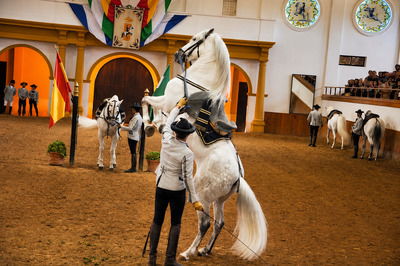
The Royal Andalusian School of Equestrian Art (Real Escuela Andaluza del Arte Ecuestre) has long been one of Jerez's most celebrated attractions. It draws not only equestrian enthusiasts but also visitors who wish to experience one of Andalusia's most famous cultural traditions.
It is here that the centuries-old traditions of classical Spanish dressage are preserved and riders are trained to work with purebred Andalusian horses, one of the most beautiful breeds in the world. These magnificent white horses have long been a symbol of the region and regularly perform in prestigious international exhibitions.
The main reason visitors come to the Royal School is the famous show ‘How the Andalusian Horses Dance’. This is neither a competition nor a circus performance, but a genuine display of equestrian artistry. Accompanied by classical Spanish music, riders dressed in traditional costumes demonstrate the movements of the High School of Dressage, while the graceful, perfectly synchronised movements of the horses truly resemble a dance.
In addition to the performance, visitors can also explore the historic complex itself. The tour includes a walk around the school grounds, visits to the stables, the Museum of Equestrian Art, the collection of historic carriages and the beautiful gardens. During your visit, you may even have the chance to watch the horses during their training sessions, making the experience even more memorable.
Anyone can visit the Royal School. Tickets are available both at the ticket office and through the official website. You can choose to attend the show, take a guided tour of the complex or purchase a combined ticket that includes both experiences. Prices vary depending on the option selected: a guided tour usually costs around €15–20, while tickets for the performance are typically priced at around €25–35 for adults.
💡 Tip: If you only have one day in Jerez, it is best to choose the famous show, as it is widely regarded as the highlight of the Royal School. Those wishing to gain a deeper understanding of the history of Spanish equestrian art will enjoy the full guided tour of the complex. In any case, it is advisable to check the schedule in advance, as performances are not held every day, and during the peak tourist season tickets often sell out several days ahead.
Flamenco in Jerez

Alongside sherry and its famous Andalusian horses, Jerez de la Frontera is regarded as one of the world's capitals of flamenco. Here, flamenco remains a genuine part of everyday life rather than simply a tourist attraction. Many renowned performers were born in Jerez, while the Santiago and San Miguel districts are considered the historic heartlands where flamenco traditions first took shape.
Today, anyone can experience this unique art form. Evening performances take place in dedicated flamenco venues (tablaos), traditional wine bars known as tabancos, and cultural clubs for flamenco enthusiasts (peñas flamencas). These are the places where you can watch live performances by local artists, hear the distinctive Andalusian style of singing and experience the atmosphere that led to flamenco being recognised as part of UNESCO's Intangible Cultural Heritage.
For first-time visitors to Jerez, Tablao Puro Arte is usually the best place to begin discovering flamenco, as it is one of the city's best-known venues. Those looking for a more intimate setting should consider Tabanco El Pasaje, where performances take place in a historic wine bar and guests can enjoy a glass of famous local sherry at the same time. Another popular venue is La Guarida del Ángel, which regularly hosts concerts and musical evenings featuring well-known performers.
If you decide to watch flamenco while exploring Jerez, it is worth visiting the tourist information office in the city centre, where the staff can usually recommend the nearest performances. Many venues also publish their concert schedules on their official websites, while posters advertising upcoming shows are often displayed outside the entrance. During the peak tourist season, however, it is advisable to book tickets for evening performances in advance.
💡 Tip: Most flamenco performances begin in the evening, making them the perfect way to round off a day spent exploring the historic centre, visiting a bodega or touring the Royal Andalusian School of Equestrian Art. Following this itinerary allows you to experience Jerez not only as a beautiful Andalusian city but also as a place where its most important cultural traditions are still very much alive.
Where to eat in Jerez
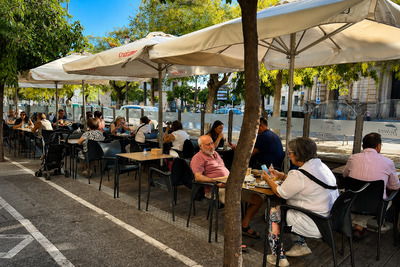
Jerez de la Frontera has long been famous not only for its wineries but also for its outstanding gastronomy. It is no coincidence that the city was awarded the title of Spain's Gastronomic Capital. Here, traditional Andalusian cuisine blends with contemporary fine dining, and dinner often becomes just as memorable a part of the trip as visiting a bodega or watching a flamenco performance.
Most of the city's best restaurants, tapas bars and traditional eateries are located in the historic centre. Calle Tornería, Calle Consistorio and Calle Pescadería Vieja are particularly popular, with cosy bars, family-run restaurants and charming terraces lining almost every street. These are the places where many locals head in the evening to meet friends and enjoy a leisurely dinner.
Among the local specialities, be sure to try ajo caliente, a traditional dish made with garlic, tomatoes, peppers, bread and olive oil, the famous rabo de toro (oxtail stew), homemade puchero, pork cooked in a sherry-based sauce, as well as Iberian ham, aged Andalusian cheeses, croquettes and fried fish (pescaíto frito). Thanks to the city's proximity to the Atlantic, many restaurants also serve fresh seafood and excellent tuna dishes.
If you want to experience the atmosphere of old Jerez, be sure to visit one of the traditional tabancos. These historic establishments once sold sherry directly from oak casks, and today they are cosy venues where you can sample local wines and famous sherry while enjoying classic Andalusian tapas. Many tabancos also host intimate flamenco performances in the evening, making it easy to combine dinner with live music.
For those looking for tried-and-tested recommendations, travellers often suggest Tabanco El Pasaje, one of the city's best-known venues with evening flamenco performances, Bar Las Banderillas, famous for its traditional tapas, Atuvera, which offers creative contemporary cuisine, and La Carboná, a restaurant housed in a beautifully restored former bodega and renowned for its original interpretation of Andalusian food. For more adventurous flavour combinations, many visitors also recommend Alboronía, where traditional Andalusian cooking is combined with Moroccan influences.
💡 Tip: If you are planning to spend the whole day in Jerez, don't rush to leave once you've finished sightseeing. In the evening, the historic centre comes to life: terraces fill with people, concert venues open their doors and the tabancos become gathering places for locals. This is the perfect time to discover the city's gastronomy, enjoy a glass of local sherry and experience the authentic atmosphere of Andalusia.

 English
  Español
  Русский