
Driving licences in Spain — one of those issues that many people have to deal with sooner or later after moving to Spain. Can you continue driving with your existing licence, do you need to exchange it, and if an exchange is not possible — how do you obtain a Spanish one? At first glance, all of this can seem difficult to understand, especially when you are dealing with the Spanish system for the first time.
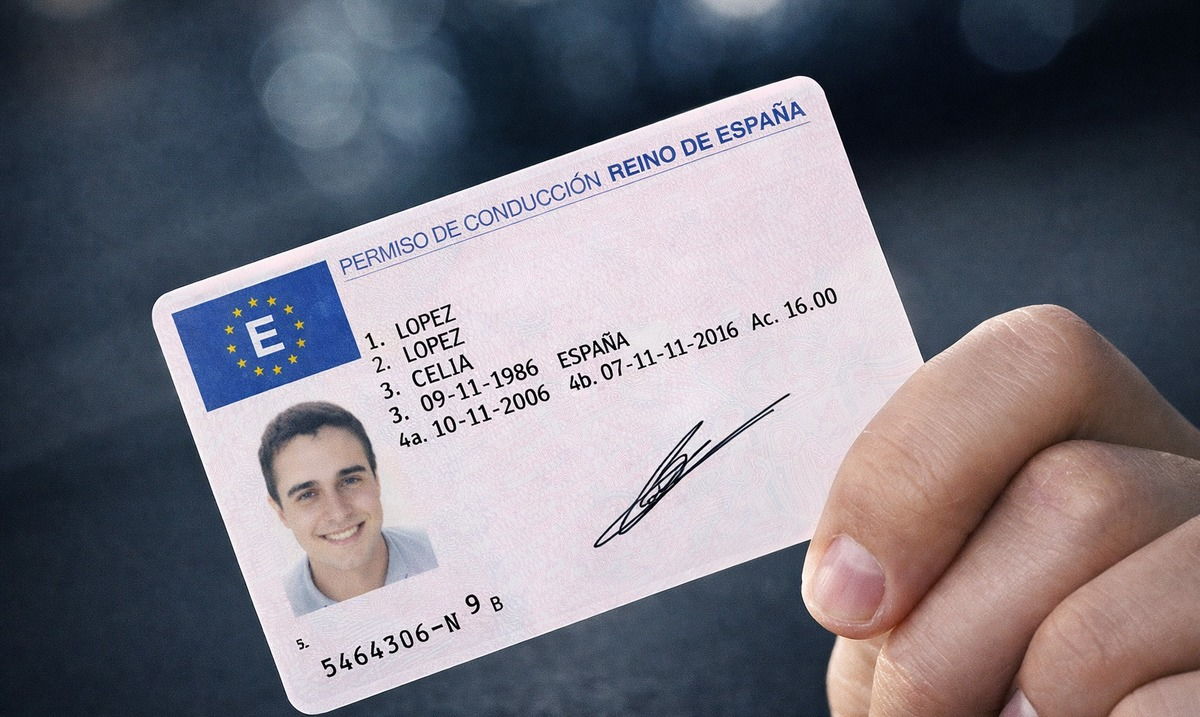
In practice, however, everything is much clearer if you first determine which situation applies to you. From there, all that remains is to understand the specific rules and documents — and what initially seems like a major problem gradually becomes a routine administrative procedure.
Contents:
- Can you drive in Spain with a foreign driving licence
- Who can exchange a foreign driving licence for a Spanish one
- How to exchange a driving licence in Spain
- If an exchange is not possible: how to obtain a driving licence from scratch
- How driving lessons work in Spain
- What happens if you drive with an invalid driving licence
Can you drive in Spain with a foreign driving licence
If you come to Spain on holiday or for a few months, you can drive with your national driving licence as long as it is recognised in Spain and remains valid. For some countries, you may also need an international driving permit or an official translation.
If, however, you move to Spain and become a resident, it is worth dealing with your driving licence in advance. For EU and EEA citizens, things are fairly straightforward — their driving licences remain valid in Spain until they expire. The situation is different with licences issued by other countries: if they meet DGT requirements, after obtaining residency you can use them for no more than six months.
What happens next depends on the country that issued your driving licence. If Spain recognises the possibility of an exchange, you can replace it with a Spanish driving licence without completing full training. If no exchange is available, you will have to obtain a Spanish driving licence from scratch.
Who can exchange a foreign driving licence for a Spanish one
A foreign driving licence cannot be exchanged for a Spanish one in all cases. It depends primarily on the country that issued the driving licence.
If you have a driving licence from an EU or EEA country — you can exchange it for a Spanish one without taking exams. However, this is not compulsory: with a valid European driving licence, you can drive in Spain until it expires.
If your driving licence was issued outside the EU and EEA, there must be an agreement between Spain and the country that issued the licence for an exchange to be possible. For example, such agreements are in force with the United Kingdom, Switzerland, Ukraine, Moldova, Georgia, Morocco and a number of Latin American countries. For ordinary passenger cars and motorcycles, exchanges under these agreements can be carried out without exams.
If you have a Russian, Kazakh, Uzbek or Tajik driving licence, you currently cannot exchange it for a Spanish one through the standard canje procedure: these countries are not included in the current list of DGT agreements. In this case, once the period during which you can use a foreign driving licence in Spain expires, you will have to obtain a Spanish driving licence from scratch.
There is also an important condition for countries with which Spain has an agreement: the foreign driving licence must have been obtained before you became a resident of Spain. If the licence was obtained after you became a resident, it generally cannot be exchanged. DGT makes a specific exception to this rule for South Korea.
How to exchange a driving licence in Spain
If you have already established that your driving licence can be exchanged, the procedure itself usually consists of several consecutive steps. There is nothing particularly complicated about it — the main thing is to prepare the documents in advance and not leave the exchange until the last minute.
1. Prepare the documents. You will need an identity document, proof of residency in Spain, your valid foreign driving licence and a medical certificate (informe de aptitud psicofísica) from an authorised medical centre. You will also need to pay the government fee. In some cases, DGT will additionally ask you to prove that you were not yet a resident of Spain when you obtained your driving licence.
2. Submit your application to DGT. For many countries, a digital canje is currently available: the application is submitted through DGT's online services using Cl@ve or a digital certificate. If online submission is not available for your case, the exchange is processed through the Jefatura Provincial de Tráfico by appointment.
3. Wait for the documents to be checked. DGT will check your application and the details of your driving licence. For some countries, confirmation from the authority that issued the driving licence is required first. If everything is in order, you will receive a notification that you can proceed to the next stage.
4. Hand over the original foreign driving licence. Once the exchange has been approved, you need to go to the specified Jefatura and hand over the original valid driving licence. In return, you will be issued a temporary permit to drive, which allows you to drive in Spain while your permanent driving licence is being produced.
5. Receive your Spanish driving licence. The completed driving licence usually arrives by post approximately one and a half months after the exchange has been processed. This is the end of the canje procedure — you now have a standard Spanish driving licence.

If an exchange is not possible: how to obtain a driving licence from scratch
If your foreign driving licence cannot be exchanged for a Spanish one, this does not mean that you have to give up driving. In this case, you obtain a Spanish driving licence in the usual way — you complete the required training and take the exams.
And there is an important point that is not always easy to find out in advance: you can choose how to go through this process — through a driving school or on your own. A driving school is not compulsory when applying to take the DGT exams.
If you go through a driving school, it takes care of the administrative side: it submits the application for the exams, helps you prepare for the theory test, books the practical test and provides a car for the practical exam. For someone who is just getting to grips with the Spanish system, this is the simplest option — you do not need to work out all the details of the procedure yourself.
If you want to take the exams on your own, you can apply directly to DGT without using a driving school. First, you need to undergo a medical examination at an authorised centre and obtain an informe de aptitud psicofísica, then submit your application for the exams and pay the relevant fee. You can prepare for the theory test yourself — DGT even provides free practice tests.
After passing the theory test, you will have to take the practical exam. This is where a driving school can be particularly useful: you will need a vehicle that meets the exam requirements, and lessons with an instructor can help you get used to Spanish rules and the examiners' requirements.
So the option of “taking the exams yourself” really does exist, but this does not necessarily mean that you have to do everything completely without help. For example, you can prepare for the theory test yourself and submit the documents to DGT, then take a few practical lessons at a driving school.
After successfully passing the final exam, DGT issues a temporary permit to drive. This allows you to drive in Spain while your permanent driving licence is being produced, after which it is sent to you by post.
How driving lessons work in Spain

If you have decided to obtain your driving licence through a driving school, the process is usually quite straightforward. First, you enrol at an autoescuela, choose a training package and start preparing for the theory test. The driving school also takes care of submitting the documents to DGT and booking the exams.
Theory training
You can study the theory in classes at the driving school itself or independently using study materials and practice tests. The main thing is to have a good knowledge of Spanish road traffic rules, signs and the specific aspects of driving on Spanish roads. DGT provides its own free practice tests, so it is useful to do them regularly before the exam.
When you are ready, the driving school will submit the documents for the theory test. To obtain a standard category B driving licence, you need to successfully pass both the theory and practical parts of the exam.
Practical lessons and the exam
After the theory comes the most interesting part — driving lessons with an instructor. You will gradually learn to deal with urban traffic, junctions, parking, changing lanes and other situations that may arise during the exam. DGT recommends that a practical lesson should last at least 45 minutes.
It is impossible to determine the number of lessons in advance: some people need just a few weeks, while others require considerably more practice. The instructor will usually assess when you are ready for the exam. If you feel confident behind the wheel, that does not mean you can immediately take the exam — it is important to get used specifically to the requirements of the Spanish driving test system.
The practical exam takes place in a driving school car with the instructor and a DGT examiner. For category B, there is no separate manoeuvres test: the required manoeuvres are included in the practical driving test.
How much does driving school training cost
There is no fixed price across Spain. The cost depends on the city, the driving school itself and, above all, how many practical lessons you need. As a result, two driving schools in the same city may offer noticeably different total prices.
In 2026, a rough guide to the total cost of obtaining a category B driving licence is around €700–1,500. This amount usually includes theory, practical lessons, the medical certificate and the government fee, but you should check the contents of the package carefully with the individual driving school. A single practical lesson usually costs around €25–50.
You should also take into account the DGT government fee — in 2026, it is €94.05. This fee gives you the right to take the exams twice. If you fail the exam twice — the theory test, practical test or both — you will need to pay the fee again to continue the process.
Therefore, when choosing a driving school, it is better not to look only at the matrícula price. Ask how many practical lessons are included in the package, how much an additional lesson costs and which expenses you will have to pay separately. The number of practical lessons is usually what has the biggest impact on the final cost of obtaining your driving licence.
What happens if you drive with an invalid driving licence

If the period during which your foreign driving licence is valid in Spain has expired, you cannot continue driving with it. For example, for licences issued outside the EU and EEA, after obtaining residency you have a maximum of six months, provided that the document meets the requirements for use in Spain. After that, the licence is no longer valid for driving in the country.
If the police stop you, you may be fined for driving with such an invalid foreign driving licence. According to DGT, the fine ranges from €200 to €500: the lower fine applies if the licence could have been exchanged for a Spanish one, while the higher fine applies if an exchange is not possible, for example because there is no agreement with the relevant country.
Therefore, if you have already become a resident of Spain and realise that the period of validity of your foreign driving licence is coming to an end, it is better to resolve the issue of the canje in advance or start obtaining a Spanish driving licence from scratch. Continuing to drive in the hope that you will “sort it out later” is definitely not the best option.
And there is one more important point: an invalid foreign driving licence is not the same as never having held a driving licence. In the latter case, this may involve not just an administrative fine but criminal liability. The Spanish Criminal Code provides for penalties for driving a vehicle by a person who has never obtained a driving licence.
What else may be useful after moving to Spain:
- NIE in Spain: how to get one and what documents you need — what an NIE is, when you need one and how to apply for it.
- Empadronamiento in Spain — how to register your place of residence and why this registration is important after moving to Spain.
- Fines in Spain — what you need to know about fines and rules to avoid unpleasant surprises behind the wheel.
- Parking rules in Spain — the main parking rules, road signs and restrictions that drivers need to know.
- Cost of living in Spain — the main costs of transport, food and other everyday expenses.

 English
  Español
  Русский